This is an outlet. There are about a dozen within reach of where you're sitting, and nothing about it suggests it has a history.
It's screwed into a wall; say, in a new house outside Dallas. The wire behind its faceplate runs into the stud bay, up through the plate, and back through every room to a gray breaker panel in the garage.
And behind that panel, the wire keeps going: back through a lumberyard's distributor, a Georgia rod mill, two container ports and an ocean, a Chinese smelter, a port with its own desalination plant, and a hole in the driest desert on Earth. Half a world of arrangements, all so the light comes on.
This study is about those arrangements, and about the fact that almost none of them keep any slack.
How to read this
A map only answers where. Two more scales run down this page. Both are logarithmic, and that is the finding: the quantities here span fourteen orders of magnitude.
A map only answers where. This study also measures how long and how much energy, and the quantities here span fourteen orders of magnitude: from a minute to a century, and from a second of a home’s electricity draw to a million home-years. On a desktop monitor, those two measures, how long and how much energy, run down the page as two scales.
- how longa minute to a century
- how much energycounted in a home’s electricity use: a second of a home’s draw to a million home-years
Hover or tap any mark and it will say what it measures and how much.
How we know any of this
Four times in this study, at four different links, the instrument that would let the people living there see what is happening to them (a baseline study of an aquifer, an air monitor on a fence line, a pressure gauge in a disposal well) is built after the harm is established: the intervals run from about five years to more than a centurystudy-g1 · validated. One of the four, the vinyl-chloride monitoring at the chemical plants that make the plastic in an IV bag, was then deferred two more years, by a proclamation filed the morning the requirement took effectchl-g1 · validated.
The part worth noticing is what kind of instrument gets built. Where a regulator eventually acts, the thing it builds is public (a fence-line dashboard, an open pressure tool, an open courtroom), and a quarter of fence-line readings, once filed, cannot be unpublished. Where none does, as around the Guixi smelter, what is known about the soil and the vegetables was established by researchers and an NGO, and exists without belonging to anyone in those villages who could use it. What a public instrument changes is who is able to make the argument about the harm, the people living beside it and not only the regulator, not who wins it.
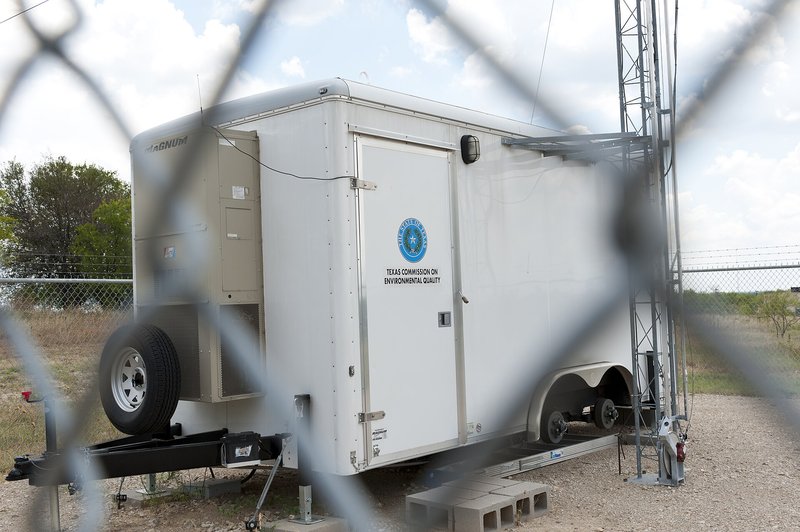
Chapter one · copper
Follow one spool of building wire, start to finish. Its paperwork would look something like this; the study fills in each line only as the referees validate it.
WAYBILL · consignment 1 of 6
| Consignment | one spool NM-B building wire, 88 kg copperdfw-f1 · validated |
| Origin | Minera Escondida, Atacama Desert, Chile |
| Distance traveled | the ocean legs, port to port; the longest about 6,700 miles (10,760 km), Shanghai to Los Angeles. And overland, in straight lines that the routes exceed: in China, at least about 280 miles (450 km) from the port to the smelter and the same back; in the United States, at least about 1,850 miles (3,000 km) from Long Beach to the mill at Carrollton, and at least about 650 miles (1,050 km) from the mill to the Dallas area. The pipe from the mine to its own port is about 105 miles (170 km). The ocean distance is measured between the distance table’s own ports; the map pins neighboring ports, Ningbo and Long Beach, and the study does not establish which of each pair this cargo usedcol-d1 · validated; route-d8 · validated; route-d6 · validated; route-d7 · validated; esc-c1 · validated |
| Days in transit | 48–52 days at sea, both crossings, at each fleet’s average speed; time in port, at the smelter, overland and at the mill is not sourcedroute-t1 · validated; route-t3 · validated |
| Energy to make | ≈ one household-month of electricity (0.35–1.15 by boundary)dfw-c1 · validated |
| Ocean fuel, both crossings | four or five gallons (3.6–5.3; sea legs only; overland legs excluded)rh-bunker-comp · validated |
| Buffer at destination | no figure what a distributor keeps at the end of this chain is not published in the federal monthly survey. The parent category that it does publish measures electrical and electronics wholesalers in dollars of stock over dollars of sales, and on a chain priced in copper that is not a count of wiredfw-b1 · validated |
| Final disposition | three endings, and one of them is not an ending: tailings at the mine, accumulating since the day extraction started; insulation to landfill; and demolition scrap re-entering the smelting pool, a trade that rerouted twice in five years as import specifications tightened on both sides of the Pacificscrap-g1 · validated |
Your builder calls: the framing is up, the house is on hold, the wire has not come. You ask how long. Nobody can tell you: what a distributor keeps is in no survey this study could find, and it looked. Nobody’s lights go out. The wire in your walls crossed the Pacific twice before it got there.dfw-b1 · validated; col-d1 · validated; rh-bunker-comp · validated
1 · extract
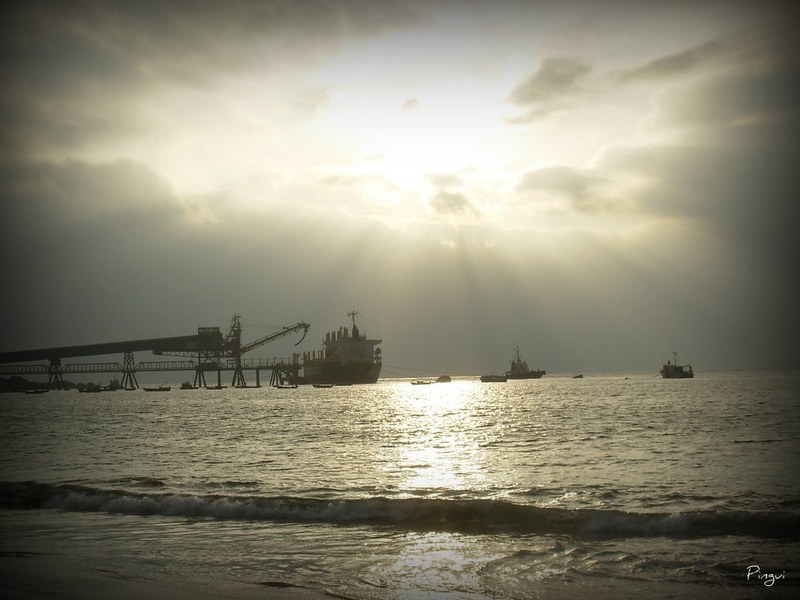
The wire begins as ore under the Atacama Desert at Minera Escondida: one pit complex producing about one tonne in every eighteen of the world's mined copper (FY2025)esc-c2 · validated. Its concentrate leaves not by truck but by a 170-kilometer slurry pipeline to the mine's own private portcol-f1 · validated.
Across Chile, concentrating copper took about 13 gigajoules of electricity for every tonne of copper in the concentrate in 2024, up by nearly half since 2010. The state copper commission gives the reason plainly: deeper pits and harder rock. In the open pits, the fuel burned per tonne of copper has doubled over the same years as ore grades fellesc-f5 · validated.
Who this card names
copper · 2 · process (transport)
Puerto Coloso
- Who
- The port is Minera Escondida's own, and the desalination plant beside it is run by EWS. The Caleta Coloso fishing community's organizations have administered the cove under Chile's Caletas law since 2025, and the port's owner funds the cove's new facilities through its foundation[col-g1 · validated].
- Energy
- Concentrate goes down the 105-mile (170 km) slurry pipe and water comes up the same corridor. Desalting costs 3.4 kWh a cubic meter and the pumping about 14, so the climb costs four times the desalting[esc-c1 · validated].
- Ecosystem
- One site carries two lifelines, the mine's outlet and its water supply: lose Coloso and the mine loses both, on whatever water buffer it holds[esc-w1 · validated].
- The comparison
- The water piped up to the pit carries about 1.4 TWh a year, about as much electricity as 130,000 US homes use in a year[esc-c1 · validated].
Each bracketed id is a row in the study’s register, listed in Appendix A of the paper.
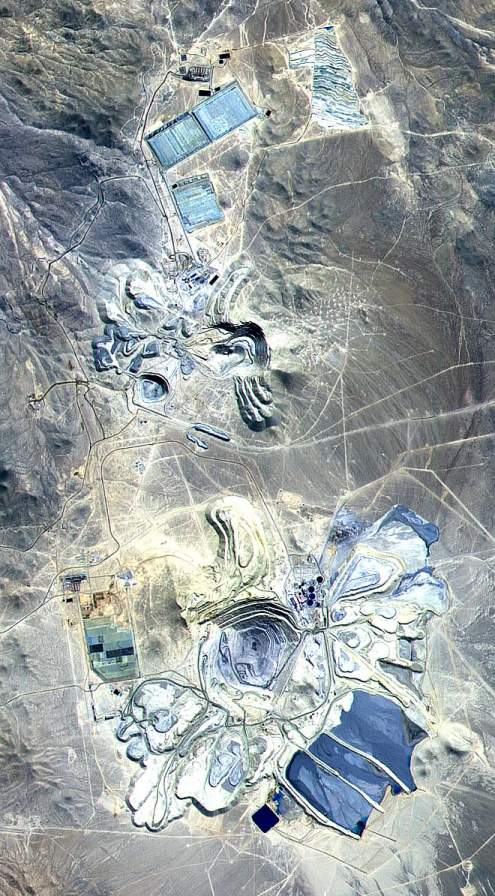
This is the district at true scale: pits, leach ponds, and tailings works spanning tens of kilometers. The water that keeps it running is seawater now, desalinated at the coast and pumped 3,100 meters uphillesc-c1 · validated. The basin's Indigenous communities (the Peine community filed before the state did) took the aquifer drawdown to court; the case ended in a court-approved conciliation (fourteen measures, a standing governance table, implementation still under tribunal supervision), while the court put the aquifer's own recovery at around the year 2200esc-g1 · validated.
Lay a familiar outline over the district, at the same scale:
Who this card names
copper · 1 · extract
Minera Escondida
- Who
- BHP operates the mine with 57.5%, Rio Tinto holds 30% and the JECO companies 12.5% between them, 10 and 2.5. The company's own annual report gives 4,000 of its own employees and 6,532 operational contractors at the end of 2025, and does not say whom 'operational' leaves out[esc-f1 · validated]. The Comunidad Atacameña de Peine is both litigant, having filed before the state did, and now co-governor through the standing governance table; the state is at once allocator and co-plaintiff, through the DGA, the CDE, the SMA and the Environmental Tribunal.
- Energy
- Escondida and the Spence mine together contracted 6 TWh a year of renewable electricity from Enel Generación Chile (from August 2021) and Colbún (from January 2022); the volumes are contractual and annual, shared between two mines, and say nothing about hour-by-hour supply[rh-esc-power-p · validated].
- Ecosystem
- The drawdown case on the MNT aquifer ended in a court-approved conciliation in December 2024, on a divided bench: about US$47M and 14 measures, with implementation under tribunal supervision, and the court put the aquifer's own recovery at about the year 2200[esc-g1 · validated]. Since 2020 the mine has run on 100% desalinated seawater. It is pumped 105 miles (170 km) inland and 3,100 m up[esc-c1 · validated].
- The comparison
- One pit is about 5.7% of the world's mined copper, one tonne in every eighteen, in its 2025 fiscal year[esc-c2 · validated].
Each bracketed id is a row in the study’s register, listed in Appendix A of the paper.
2 · process
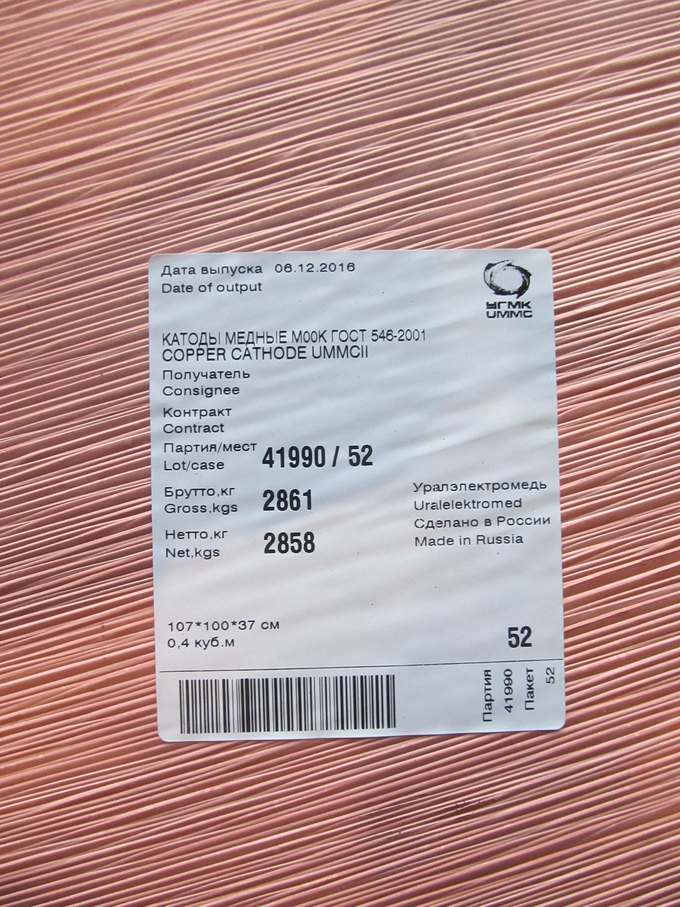
The concentrate ships across the Pacific to Guixi, in Jiangxi province, the only single plant on Earth that refines more than a million tonnes a yeargux-c2 · validated. The wire's copper becomes cathode here.
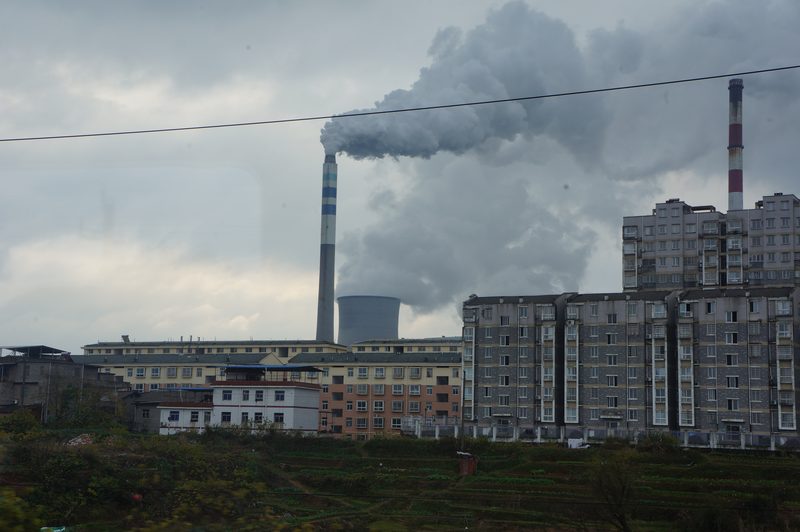
The smelter at true scale, rail spurs running into it, and farming villages in its deposition plume, about fifteen villages, some ten thousand people, with documented metals in their soil and vegetablesgux-f1 · validated. What powers the smelter is not on public record. A 1,880-megawatt, four-unit coal station stands beside it (Global Energy Monitor’s figures); whether any of that output crosses the fence is stated nowhere a reader can checkrh-gux-power-p · validated. The dossier card carries who, energy, ecosystem, and one comparison.
Who this card names
copper · 2 · process (smelt & refine)
Guixi smelter
- Who
- Jiangxi Copper Corporation is owned and operated by the provincial state, which is its environmental regulator at the same time; the group's holding stood at 44.06% at year end[gux-f2 · validated]. The Guixi Power Generation Company stands next door, and about 15 farming villages, some 10,000 people, lie in the deposition plume[gux-f1 · validated].
- Energy
- The smelting stage takes about 9 GJ a tonne, on a 2017 Chinese average within a band of 9 to 14, while the electrolytic finish takes only 250 to 400 kWh a tonne: the heat, not the electricity, is the story of a smelter[gux-c1 · validated].
- Ecosystem
- Peer-reviewed work finds arsenic, cadmium, copper, lead and zinc in the soils and vegetables of named villages[gux-f1 · validated].
- The comparison
- It is the only single plant on Earth that refines more than a million tonnes a year: 1,012.5 kt in 2024[gux-c2 · validated].
Each bracketed id is a row in the study’s register, listed in Appendix A of the paper.
3 · combine
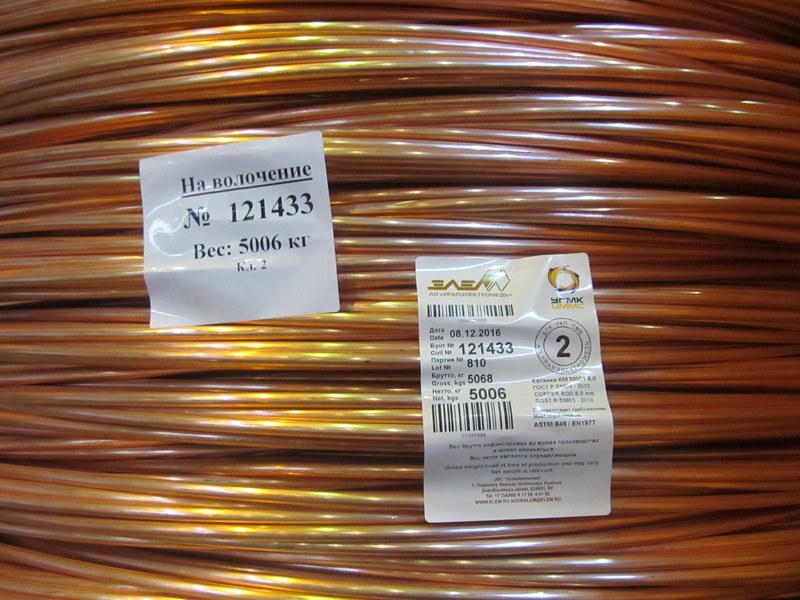
Then the copper crosses the same ocean again: cathode east to Long Beach, then overland to Carrollton, Georgia, where Southwire can cast it to rod at close to a tonne a minuteswr-f3 · validated and its Building Wire Plant in the same town makes the wireswr-f5 · validated. The insulation extruded around it is PVC: the salt chain, entering the copper chainsalt-x2 · validated.
the crossing
Waiting is what this chain mostly does. This crossing is the shorter of the two: the ore’s run to the smelter takes more than twice as longroute-t3 · validated, and nobody can shorten an ocean. The fuel spent: four or five gallons of bunker for this spool’s sharerh-bunker-comp · validated.
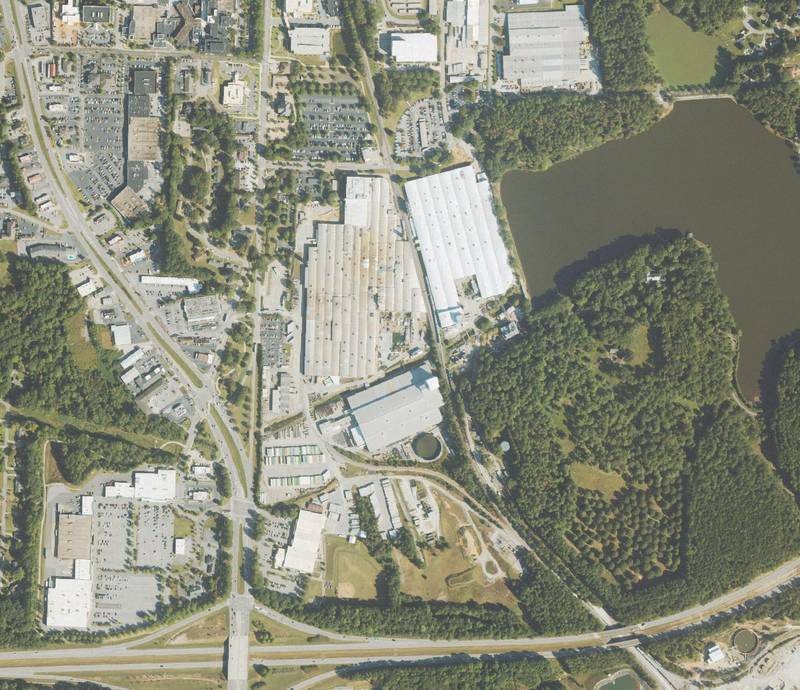
One Southwire Drive, at true scale. The cathode that left the Atacama as ore is now NM-B cable on a spool. Making one home's worth of it took roughly as much energy as that home uses in electricity in a month, and over its life, the wire will deliver several hundred times the energy it cost to makedfw-c1 · validated. That asymmetry, cheap to make next to what flows through it, slow to replace, is the study's whole argument in one object.
Who this card names
copper · 3 · combine (rod mill and building-wire plant)
Southwire, Carrollton
- Who
- Southwire Company LLC is family-owned and, by its own account, one of the leading manufacturers of wire and cable[swr-f1 · validated]. Labor at the Carrollton works appears as a role and no more: rod-mill and building-wire-plant crews[swr-w1 · validated]. No public body is named at this works. This study holds nothing on who lives beside the works.
- Energy
- The rod mill is rated at 54 tonnes an hour, on the company's own figure[swr-f3 · validated], and the maker specifies its shaft furnaces for natural gas, LPG, or both[swr-f2 · validated].
- Ecosystem
- This study holds no ecosystem record for this works. The house wire's insulation is PVC, and what making PVC costs, and whom, is followed in the salt chapter as a material and not as this wire's own supply[salt-x2 · validated].
- The comparison
- Cathode can become rod at close to a tonne a minute[swr-f3 · validated].
Each bracketed id is a row in the study’s register, listed in Appendix A of the paper.
4-5 · install & distribute
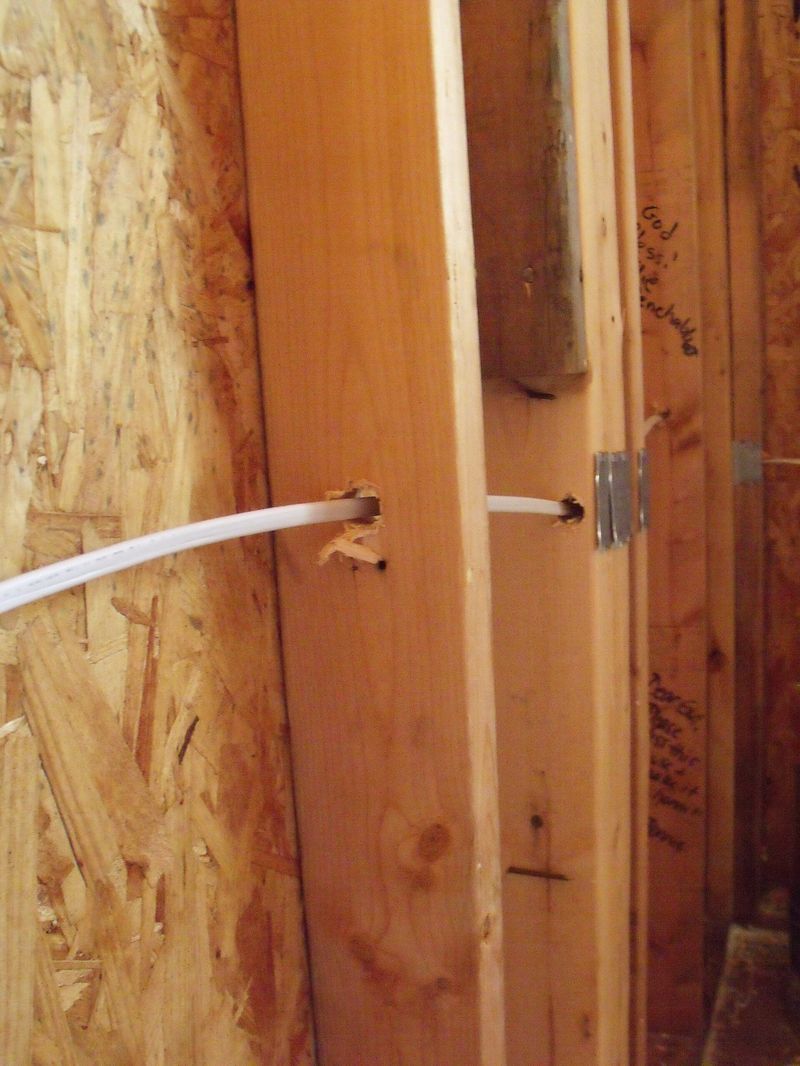
A distributor's warehouse, a contractor's van, a Tuesday. An electrician staples the wire into the stud bay of the house outside Dallas, and it disappears into the wall, where, if everything holds, no one will ever see it again.
Most supply-chain maps end here.
6 · dispose
Ours doesn't; it turns around. The chain has three endings, and one of them isn't an ending: tailings at the mine, which began accumulating the day extraction started; insulation to landfill; and demolition scrap re-entering the smelting pool, a trade that rerouted twice in five years as import specifications tightened on both sides of the Pacificscrap-g1 · validated. The dashed ring on the Malaysian node is honesty: we haven't named a facility yet, so the map won't pretend to a pin it hasn't earned.
Chapter two · iron
Follow one large power transformer, start to finish. Its paperwork would look something like this; the study fills in each line only as the referees validate it.
WAYBILL · consignment 2 of 6
| Consignment | one large power transformer, bespoke |
| Steel | one domestic mill; ~80% importedgoes-f1 · validated; goes-f2 · validated |
| Copper | about 40 t at 500 MVA, one maker’s declarationxfmr-x1 · validated |
| Build | ~9 months intrinsicxfmr-c1 · validated |
| Wait | 36 months commonly quoted, 60 recorded; floors, not levelsxfmr-f1 · validated |
| Price | quoted ~+80% (NIAC), transaction +63–68% (federal PPI)xfmr-f15 · validated |
| Buffer at destination | utilities reported spares equal to 116 percent of the most-crucial units in 2016, which is the high-voltage machines standing in substations and not the 4,900 to 6,799 of the fleet; the two most formal sharing programs had never been used as of 2024grid-g1 · validated; xfmr-f5 · validated |
| Final disposition | refit; scrap steel recycles wellTGS-127 · SECONDARY; the copper windings go for scrap, and what recycling them takes is not measured in this study |
The night the substation transformer dies, you hear it before you know it: the refrigerator stops mid-cycle. The utility's spare, if it has one, is at another substation, or it is a machine not yet built, at least three years out on a maker’s order book. That machine’s chain starts at the only mill in the country that makes its steel.xfmr-f1 · validated; goes-f1 · validated
the machine
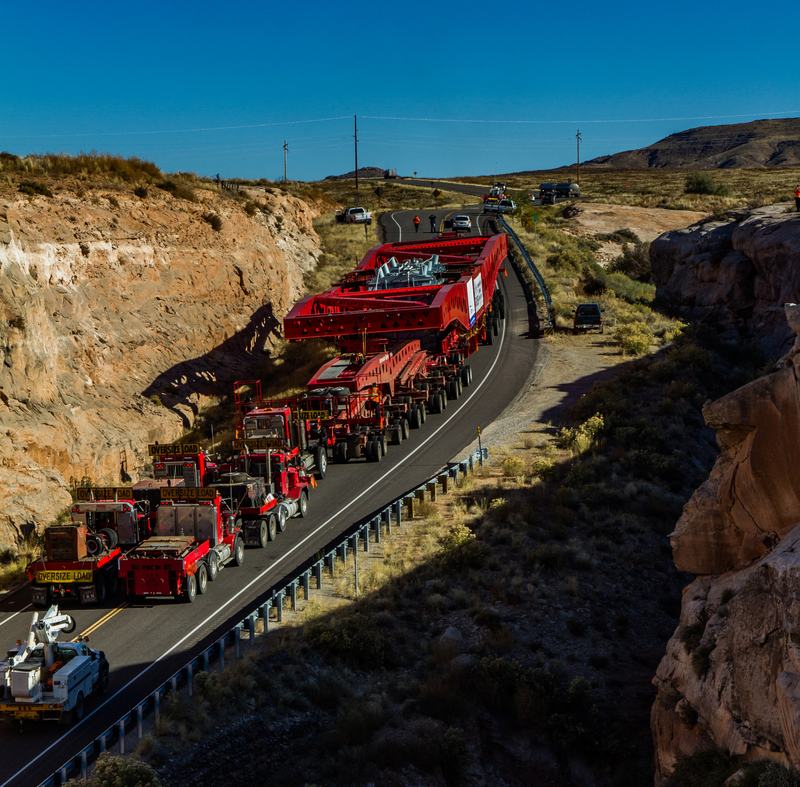
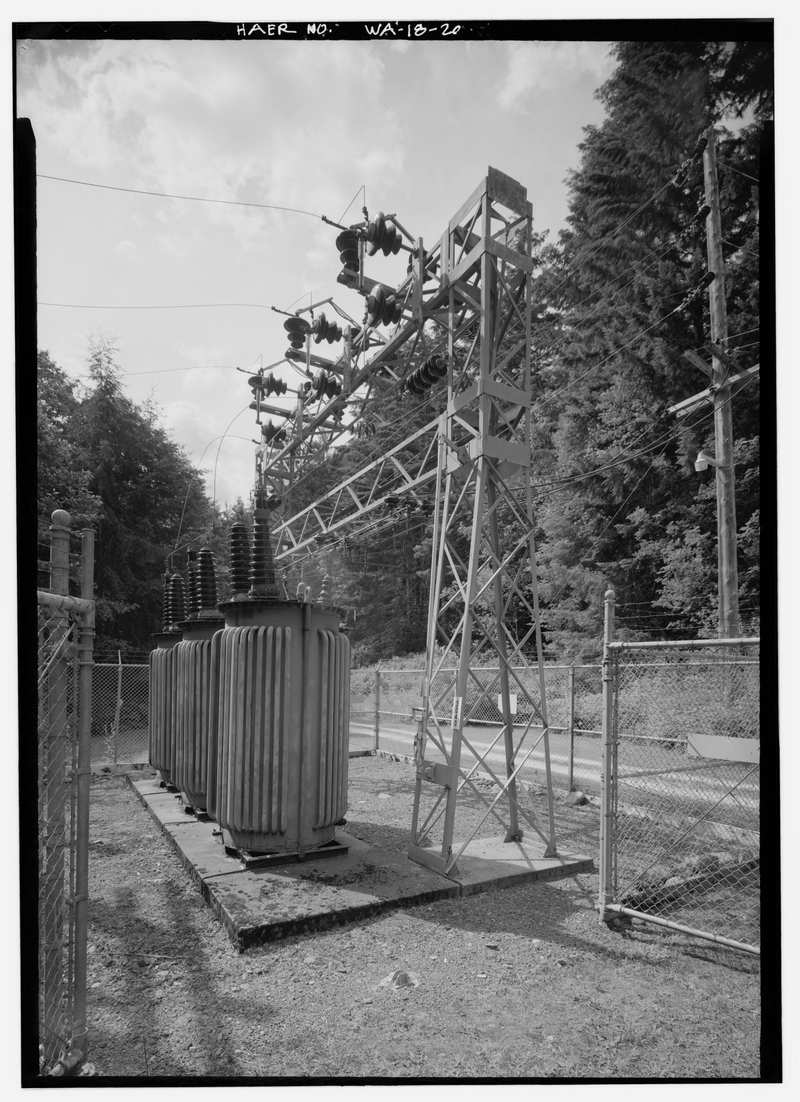
The biggest of the machines this chapter follows weigh as much as a loaded 747move-f1 · validated; comparison cleared by the energy seat: “loaded” is load-bearing, and every one is wound by hand. A worker guides copper wire, tens of tonnes of it in the big units (about forty in one maker’s declared 500 MVA design)xfmr-x1 · validated, around a core of steel so specialized that sheets are rolled to nine-thousandths of an inchgoes-f2 · validated. It takes months to build one, years to receive one, and when it works, you never see it: it sits behind a fence, humming, turning transmission voltage into the electricity your wall knows. The grid owns thousands of themxfmr-f5 · validated: 4,900–6,799 LPTs.
2 · the steel
Transformer cores need grain-oriented electrical steel, GOES, and the United States has exactly one company that makes any: AK Steel, now Cleveland-Cliffs, at Butler, Pennsylvaniagoes-f1 · validated. It produces an intermediate grade American transformer builders mostly don't use; the top grade is made by one company on Earth: Nippon Steel, in Japangoes-f1 · validated. About 80% of the GOES in American transformers is importedgoes-f2 · validated. And the one domestic mill is being crowded out of its own product: the same machines can make electric-vehicle motor steel, which pays better: the lithium chain competing with the iron chain for the same millgoes-f2 · validated.

Who this card names
iron · 2 · process (the steel)
Butler Works, PA
- Who
- Cleveland-Cliffs, the former AK Steel works, is the only US maker of grain-oriented electrical steel, and in DOE's own words domestic GOES is “a major weak link… shrinking supply”[goes-f1 · validated]. Labor at the Butler works appears as a role and no more: mill crews[but-w1 · validated]. This study holds nothing on who lives beside the works.
- Energy
- This study holds no energy figure for this works.
- Ecosystem
- This study holds no ecosystem record for this works.
- The comparison
- GOES sheets are rolled to nine-thousandths of an inch[goes-f2 · validated]. GOES and the specialty copper inside a transformer are each about a quarter of its production cost[goes-f2 · validated], and the same machines can make EV-motor steel, which pays better: the lithium chain competing with the iron chain for the same mill[goes-f2 · validated].
Each bracketed id is a row in the study’s register, listed in Appendix A of the paper.
3 · the works
A large power transformer is not a product; it is a project. Every unit is engineered to its substation: in the government’s own words, “usually custom-built to fit the specifications of their use case”xfmr-f2b · validated, and the heart of the build is still manual: winding crews, paper insulation placed by hand, master weldersxfmr-f6 · validated. Intrinsic build time, with an open slot and no queue: about nine months in the last slack marketxfmr-c1 · validated, 2010 anchor. The works on the map is a real one: Hitachi Energy’s plant at South Boston, Virginia, building transformers since 1968, with three dated expansion steps between October 2022 and a groundbreaking in June 2026. The record gives dates and dollars and not one capacity figure, so no capacity is drawn from itxfmr-f9 · validated.
the move
Moving one is its own engineering discipline: 100 to 400 short tons, 200,000 to 800,000 pounds in the department’s own words,move-f1 · validated, on one of a handful of special railcars in North Americamove-f1 · validated, with the last five to ten miles the hardest of the journeymove-f1 · validated. The transport is itself a chokepoint: it binds exactly when many units must move at once.
in service, and the aging wave
The average American large power transformer is around forty years old, and seventy percent are twenty-five or olderxfmr-f5 · validated, DOE 2014. Here the honest number matters more than the scary one: forty years is the design life, not a cliff. Fitted to the primaries, roughly four in five units sail past forty; the median unit lives nearly sixty yearsxfmr-c1 · validated; hazard ESTIMATED bands stated. The fleet is not about to fall over. It is about to need replacing at a rate the queue cannot casually absorb.
What happened to the wait
Before the pandemic you could order a large transformer and receive it inside a year; today thirty-six months is the commonly quoted wait, sixty the recorded maximumxfmr-f1 · validated, DOE 2024. One maker’s chief executive said in March 2025 that its order backlog for turbines, power transformers and switchgear together stretched into 2028xfmr-f13 · validated. Prices are up by about two-thirds on the federal index and four-fifths on quoted pricesxfmr-f15 · validated, both bases. Nothing was destroyed. Demand simply arrived faster than a bespoke, hand-wound, single-steel-supplier industry could growxfmr-f4 · validated.
Every wait number in this chapter is a floor: the honest sentence is “at least this long” referee ruling · binding.
Who waits
The engine's sharpest finding is distributional, and it renders as a mechanism, not a number: when buyers can pay to jump the queue, the priority class waits about the build time (nine months, the build-time estimate the model is given, not something it computes) at every priority share we ran, while the standard class holds the entire queuee3-i1 · validated. Record deliveries and record waits at the same time are not a paradox: a queue grows whenever orders outrun deliveries, however many are delivered. What priority changes is who stands in it. Study 1 found that shocks bill the bottom of the income distribution; this chapter finds the same shape in industrial plumbing: the queue is long, but it is not long for everyone.
The map's question, answered
At what growth does a replacement queue become a permanent state? The boundary is computed, and the country’s published forecasts sit on the safe side of itxfmr-f7 · validated: the wedge opens between roughly 7¾ and 10½ percent a year, depending on what counts as cleared (the record draws a band, not a line).
Push the boundary: demand growth, percent a year
Slide to set how fast demand grows. The question: does the wait for a transformer ever stop growing?
Skill cap: the fastest America’s own transformer factories can grow their output each year when the limit is people: the years it takes to train the workers who wind, assemble and test these machines. The shaded band is its estimated range.
the queue clearsWaits are long, but they end: replacements arrive faster than the list grows.it depends what counts as clearedHere the answer turns on what “cleared” means: a 40-month wait, or an 80-month one. The record draws a band, not a line.the queue never clears at the slow end of skill formationPast the band, the list grows faster than it can be worked off: every year, the wait is longer than the year before.
— at a capacity response beyond the estimated cap: no mechanism in evidence grows capacity this fast.
The engine sorts a cell by where the queue ends up and whether it is still moving. Where the wait has already fallen as far as this model allows, there is no movement left to detect, and the sort has nothing to sort — so some cells at the floor come back labeled the same way as cells in the middle. They are drawn as computed, not tidied. (the Complex-Systems seat)
Every cell here is the quiet case: central parameters, no pulse, no shock arriving mid-queue. The study's coupled band is not on this plane. (the Complex-Systems seat)
At every growth rate NERC publishes, this clears; divergence needs sustained growth of roughly 7¾ percent a year on the strictest reading and 10½ on the loosest, a band rather than a line, and hotter than any published forecast. But NERC's own projection has quadrupled across four vintages, so what counts as published keeps moving.
At the forecast range NERC publishes, the expansion capability the skill cap permits clears the divergence boundary — by ×1.3 at the hottest stated regional rate (5.6%/yr) and absolutely at the national rate, where the fitted import response alone prevents divergence. The divergence wedge is real and visible on the diagram: sustained demand growth beyond roughly 7¾%/yr on the strictest reading of "cleared" and 10½%/yr on the loosest — the record draws a band, not a line, and all of it is hotter than any published forecast — pushes the required expansion rate through the primaried skill-cap floor (boundary 0.145–0.16/yr at g=0.10). The strictest curve sits within one search step of that floor from about 7 to 9½%/yr, so its first crossing is located no more finely than that. Where the boundary sits leans on the assumed import ceiling from about 3%/yr upward (the ×1.3 is ×1.25 to ×1.5 across that assumption); that every published rate clears does not: at the hottest, 5.6%/yr, the margin is six search steps at the least favorable ceiling. Boundaries computed on an optimistic no-start-delay bound (true clearances are smaller), and the x-axis itself is a moving forecast: NERC's own 10-year growth projection rose 55→80→132→224 GW across four vintages — the diagram's placement moves right if the escalation continues.
The band is where the ceiling lies, not a zone of likely operation: “the cap lies somewhere in this band; the value is estimated from skill-formation physics, and only the limit's existence is primaried (DOE 2014)” (the energy seat).
At the drawn corner, in the words of the study’s complex-systems referee: “the boundary is crossed at the corner: hot-zone demand against the slow end of skill formation is the one region of the map where the queue diverges”
Fragility, inside the guardrail
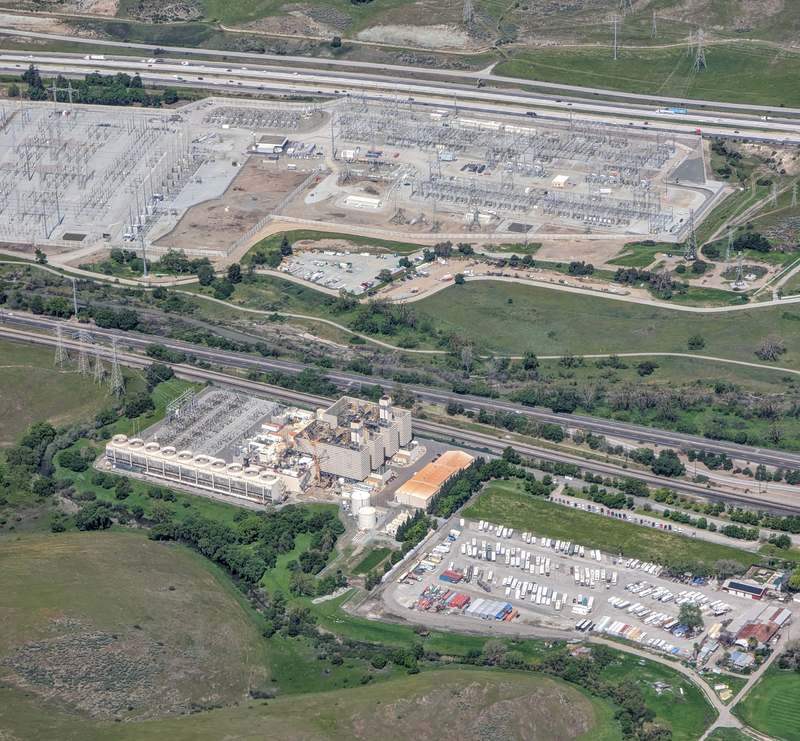
In April 2013, rifle fire damaged a number of transformers at this California substation; the one federal account declines to say how many, and so does this studygrid-f2 · validated, attributed. Two things are true about that night, and the study insists on both: the grid re-dispatched (no blackout; redundancy did its job) and repairs to the equipment took nearly a month with the power still on. The lights never went out: the system re-dispatched around the damage. The hardware took nearly a month. Electrons reroute; iron does not. That gap is this chapter in one sentence.
Public record only; no method detail renders. The contested FERC power-flow claim renders in a separate evidence-tier exhibit, and nothing in our queue model speaks to how outages start no-bridge condition.
Who this card names
iron · fragility (public record only)
Metcalf substation
- Who
- PG&E (owner-operator); this card names no one else, on purpose; public record only; no method detail renders[grid-f2 · validated, guardrail]
- Energy
- The energy story at this node is the transmission layer that re-dispatched around the damage[grid-f2 · validated].
- Ecosystem
- This study holds no ecosystem record for this substation.
- The comparison
- both truths at once: no blackout (the system re-dispatched around the damage) AND nearly a month of repairs with the power still on: electrons reroute, iron does not[grid-f2 · validated]
Each bracketed id is a row in the study’s register, listed in Appendix A of the paper.
Agency: the reserve question, made computable
In 2015 Congress asked whether America should keep a strategic reserve of transformers; the study concluded what the industry already knew, that bespoke machines make a warehouse of spares nearly useless, and the reserve was shelved for voluntary sharing programsgrid-g1 · validated. Our engine turns that judgment into a curve: a reserve's value scales with standardization, the fraction of failures a stocked spare can serve, and that fraction is a choice, made a few hundred times a year by utilities each buying for its own system, none of whom is choosing itgrid-g1 · validated. The buffer isn't missing because nobody thought of it. DOE’s own account of why is regulatory: utilities may raise rates to recover from a disaster, and not to prevent onegrid-g1 · validated.
The reserve you can standardize: two levers, neither of them yours, and who it is for
Spares utilities reported holding in 2016: 116% of the most-crucial units. No control below changes this number.DOE p. 38 · grid-g1 · validated “Across the U.S., the number of high voltage spare LPTs the utilities reported was 116 percent of the number of high-voltage LPTs located in substations the Oak Ridge National Laboratory (ORNL) analysis designated as “most crucial” to the acceptable operation of the bulk power system.”DOE’s words
As of DOE’s 2024 report:
STEP, the industry’s sharing program, has never been used. DOE says why: it takes a presidential declaration. “Due to the stringent requirements placed on triggering events, to date STEP has never been utilized.”DOE’s words, p. 29
Grid Assurance, the one program that adds a transformergrid-g1 · validated, has not yet delivered one. DOE gives no reason. “As of this writing, GA has not yet actually provided a replacement LPT.”DOE’s words, p. 30
not a lever · nobody chooses a holder’s size
A utility with many crucial units gains least from a shared pool: one with twenty gains the least of all. Those with fewest stand to gain the most, provided the club they join is deep enough to help.
A utility running this many crucial units gains of coverage from the pool.
For a holder with one crucial unit, most of this band’s width is the size of the club: five members at the bottom, fifty at the top.Complex-Systems seat · checked
Drawn at one assumed level of interchangeability; change it below. At every level we ran, twenty gains least and the fewest-unit holder has the most to gain in a deep club. The sizes do not hold.
A voluntary club has its weakest incentive to admit exactly the members for whom it would matter most.grid-g1 · R4
31 subscribers against roughly three thousand US utilities; the exclusion is financial, not formal.Institutions & Commons seat
One reason few join, from DOE: where regulators let a utility raise rates to recover from a disaster but not to prepare for one, preparing does not pay.DOE p. 32 · grid-g1 “when regulations allow them to raise rates to recover from disasters but not to prevent them, utilities are disincentivized from investing in prevention efforts such as transformer stockpiles.”DOE’s words
Change the assumed interchangeability
share of failures a stocked spare can serve =
a lever · set by each utility, alone · no pool can overrule it
A spare stored beside the unit it backs up can be lost in the same event. The more spares kept that way, the more of those events a utility cannot cover alone. Sharing can fill no more than that gap.
share of spares stored on site
When an event takes a whole substation, a utility’s own spares miss of such events (lower if a utility splits its spares between sites, higher if it keeps them all in one place)(one value, by algebra: with nothing stored on site the two arrangements coincide).
Drawn at one assumed level of interchangeability; change it below. At every level we ran, more spares kept on site means more of those events a utility cannot cover alone. The sizes do not hold.
DOE’s words on shared yards, p. 28
“Many of these “self-supplied” spare LPTs are stored under less-than-ideal conditions, including storing them in the same substations as the in-service LPTs, making the spare LPTs vulnerable to the same events that affect the in-service LPTs”
DOE gives no number for this share, so the model tries every value and picks none
DOE says “many,” with no number, so this share is swept and never chosenComplex-Systems seat.
Change the assumed interchangeability
share of failures a stocked spare can serve =
a lever · set by nobody
The more interchangeable transformers are, the more of its own failures each utility covers, so sharing has less left to add.
Why nobody: it is the residue of roughly three thousand utilities specifying to their own systems.Institutions & Commons seat “LPTs are usually custom-built to fit the specifications of their use case.”DOE’s words, p. 18
At this level a utility covers of its own failures from its own yard; a pool adds on top.
How a purpose-built reserve is measured, in the paper
You have made the pool more shareable. It has still never been shared.Institutions & Commons seat
These curves come from a model, not from measurements. It overstates the pool’s reach (how often another utility’s spare would fit), and no gain’s size can be trusted: read each one for its direction and its order.Complex-Systems seat
INDEPENDENT compatibility OVERSTATES pooling. Real compatibility is clustered by design family. Every pooling figure here is an UPPER BOUND on the voluntary substitute's reach.Complex-Systems seat, seed 41
That bound is on the pool’s reach: whether some other member’s spare fits. What pooling adds is reach multiplied by the hole a holder’s own spares leave, and the same clustering moves the hole, in a direction this engine does not model. Read every gain here for its direction and its order, never for its size.Complex-Systems seat
The record, in DOE’s 2024 words. The study takes no position on whether a federal reserve should exist.
“A 2017 Department of Energy (DOE) Report to Congress assessed options for a strategic transformer reserve and recommended a non-government solution driven by industry actions and compliance with North American Electric Reliability Corporation’s Reliability Standard CIP-014-2 requirements.”p. 4
“In its 2017 Report to Congress, the DOE noted that a federally-owned LPT reserve program would require five or more geographically diverse sites nation-wide, and well over 100 transformers.”p. 43
“While this report does not advocate for a change in this recommendation, it does offer data indicating significant progress within the industry in addressing this issue.”p. 4, July 2024
The complete panel: every quotation, page and condition
The reserve you can standardize: two levers, neither of them yours, and who it is for
Every control below moves a computed curve. Two are levers, and each names whose hand is actually on it; neither hand is yours. The third is not a lever: no one chooses a holder’s size. It shows who the pool is for.
DOE, in its own words: “How many spare LPTs are sufficient? Where should they be located? These are not questions that can be answered precisely.”DOE 2024 · p. 34
φ, the share of failures a stocked spare can servewho sets it: nobody. It is the residue of roughly three thousand utilities specifying to their own systems; DOE: “LPTs are usually custom-built to fit the specifications of their use case.”p. 18
At this φ a holder covers of its own failures from its own yard; pooling adds on top. A purpose-built reserve would match the whole pool’s gain with of the units.The purpose-built comparison: “Not defined here. A purpose-built reserve is by construction more interchangeable than the fleet it backs, and at this φ the fleet has passed the lowest reserve we swept. What pooling adds at this point is under 0.04%.”Complex-Systems seat
Spare transformers held in the country: 116% of the most-crucial units. This number does not move when you move φ. DOE: “Across the U.S., the number of high voltage spare LPTs the utilities reported was 116 percent of the number of high-voltage LPTs located in substations the Oak Ridge National Laboratory (ORNL) analysis designated as “most crucial” to the acceptable operation of the bulk power system.”p. 38 · grid-g1 · validated
You have made the pool more shareable. It has still never been shared.Institutions & Commons seat
STEP, the industry’s formal sharing program: “Due to the stringent requirements placed on triggering events, to date STEP has never been utilized.”p. 29 DOE attributes the non-use to the trigger design: it requires a presidential declaration.
Grid Assurance, the one program that adds a transformer to the countrygrid-g1 · validated: “As of this writing, GA has not yet actually provided a replacement LPT.”p. 30 DOE attributes no cause.
c, the share of spares stored in the same substation as the unit they would replacewho sets it: each member, severally: its own storage decision, and no pool has authority over another member’sInstitutions & Commons seat. DOE: “Many of these “self-supplied” spare LPTs are stored under less-than-ideal conditions, including storing them in the same substations as the in-service LPTs, making the spare LPTs vulnerable to the same events that affect the in-service LPTs”p. 28: “many,” with no number, so c is swept and never chosen.
at φ =
When an event takes a whole substation, a holder’s own spares miss of such events: the low end is spares scattered independently across sites, the high end is spares kept together: one value, by algebra, because with nothing stored on site the two storage patterns coincide. Pooling can add no more than a holder’s own spares miss. A holder alone covers . Pooling is not a discount on stock; it is a license to hold stock where the hazard is notgrid-g1 · R2.
the size of the holder: how many crucial units it operateswho it is for: no one sets this; a holder’s size is an endowment, not a decision. The club’s incentive runs the wrong way. A voluntary club has its weakest incentive to admit exactly the members for whom it would matter most.grid-g1 · R4 31 subscribers against roughly three thousand US utilities; the exclusion is financial, not formal.Institutions & Commons seat
at φ =
A member of this size gains of coverage from the pool.
For a holder with one crucial unit, most of this band’s width is the size of the club: five members at the bottom, fifty at the top.Complex-Systems seat · checked
Why the club stays small, in DOE’s words: “when regulations allow them to raise rates to recover from disasters but not to prevent them, utilities are disincentivized from investing in prevention efforts such as transformer stockpiles.”p. 32 · grid-g1 · validated
The record, in DOE’s 2024 words. The study takes no position on whether a federal reserve should exist.
“A 2017 Department of Energy (DOE) Report to Congress assessed options for a strategic transformer reserve and recommended a non-government solution driven by industry actions and compliance with North American Electric Reliability Corporation’s Reliability Standard CIP-014-2 requirements.”p. 4
“In its 2017 Report to Congress, the DOE noted that a federally-owned LPT reserve program would require five or more geographically diverse sites nation-wide, and well over 100 transformers.”p. 43
“While this report does not advocate for a change in this recommendation, it does offer data indicating significant progress within the industry in addressing this issue.”p. 4, July 2024
INDEPENDENT compatibility OVERSTATES pooling. Real compatibility is clustered by design family. Every pooling figure here is an UPPER BOUND on the voluntary substitute's reach.Complex-Systems seat, seed 41
That bound is on the pool’s reach: whether some other member’s spare fits. What pooling adds is reach multiplied by the hole a holder’s own spares leave, and the same clustering moves the hole, in a direction this engine does not model. Read every gain here for its direction and its order, never for its size.Complex-Systems seat
Chapter three · sand
Follow one power-management chip, the cheapest part in the charger, start to finish. Its paperwork would look something like this; the study fills in each line only as the referees validate it.
WAYBILL · consignment 3 of 6
| Consignment | one power-management chip, in the charger plugged into the outlet this study opened on |
| Origin | the Spruce Pine quartz district, North Carolina |
| Distance traveled | the Pacific crossing, anchored and not pinned: about 5,600 to 6,000 miles (8,962 to 9,603 km), between ports of the kind each end would use. Los Angeles is the assumed US end and the fab is inland at Shermanroute-d2 · validated |
| Days in transit | not shown most of this cargo does not sail: of doped wafers imported from Japan in 2024, four fifths by weight traveled by air. The sea crossing is computed, at about twelve to thirteen days, and deliberately not rendered as the transit timeseat ruling: the mode renders and the day count is withheld |
| Energy to make | the silicon in one small chip, about a watt-hour, from solar-grade polysilicon at about 49 kWh a kilogram; the fab’s own electricity, which the Energy seat expects to be the larger term, is a figure this study named and did not pullpoly-f1 · validated |
| Fuel to cross | no figure four fifths of this cargo by weight flew, and a sea figure for a cargo that flew is wrong in direction and not merely in size, because a ship sits near the least fuel-intensive mode and air near the most. An air-freight intensity is the one pull that would make this a findingroute-f1 · validated |
| Buffer at destination | buyers’ median inventory of the chips they highlighted fell from 40 days in 2019 to under 5 in 2021, a median across respondents and not a measure of any one chipfab-f2 · validated |
| Final disposition | the copper on the board can return to the copper chain’s scrap pool; the silicon does not, and the federal summaries report silicon recycling in one word, insignificantew-f1 · validated; sand-x4 · validated |
You plug in the charger and nothing happens. The part that failed is a chip that manages power, cheaper than the cable, and the shop cannot get one either. When the shortage came, the median inventory of the chips buyers highlighted had fallen from forty days to under five. That chip’s chain starts in a North Carolina mine.fab-f2 · validated
the charger
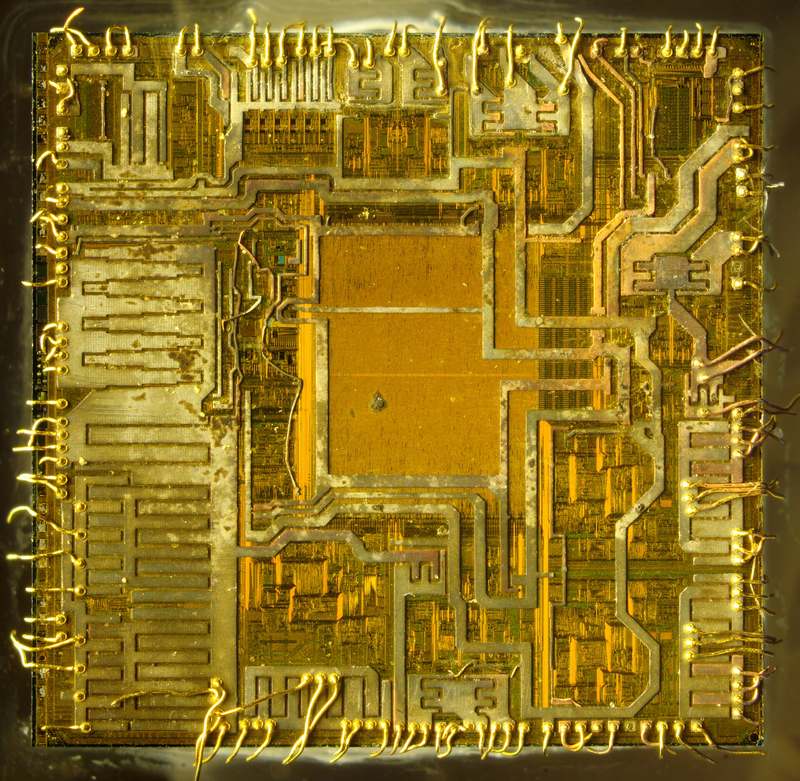
The outlet from chapter one has a charger in it now. Inside the charger is the cheapest chip in the room: a power-management chip that turns wall current into the trickle a phone can drink. It costs less than a cup of coffee, it is made on factory lines that are decades old, and in 2021 the world ran out of itfab-f2 · validated. This chapter follows that chip backwards: to a furnace, a crucible, and a valley in North Carolina that a hurricane closed the same week it closed the valley next door, roughly fifteen to twenty kilometers awaysand-x1 · validated.
1 · the valley
The crucible lining that holds molten silicon while a crystal is pulled comes mostly from one valley: Spruce Pine, North Carolina; two operatorsspine-g1 · validated. How much of the world’s supply? No agency publishes the share: the 70-to-90 percent figures in circulation trace to industry-analyst estimatesspine-c1 · validated for the form. Attributed: “the only plant in the world right now that serves the semiconductor industry in its entirety.” The counter-reading, in its own voice: a dominant source, not an irreplaceable linchpin. The chapter keeps both sentences.
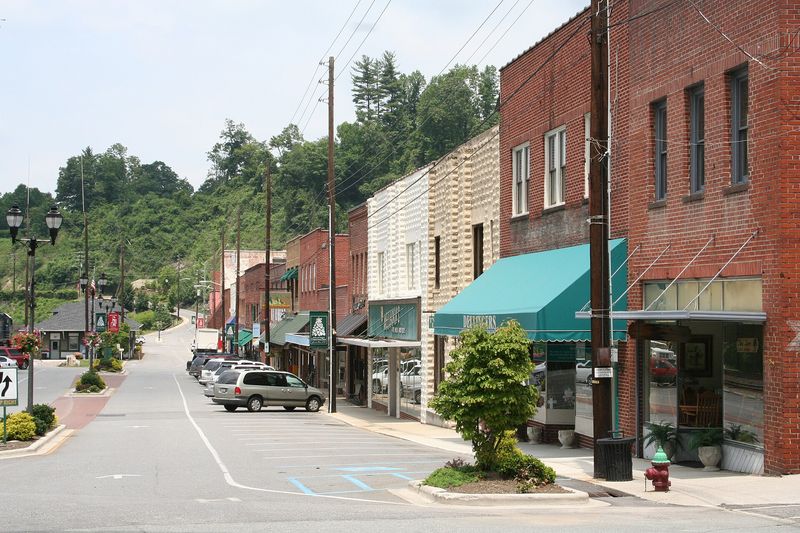
Who this card names
sand · 1 · extract (district precision)
Spruce Pine district
- Who
- The district has two operators: Sibelco, which is Belgian, and The Quartz Corp, a 50/50 Imerys and Norsk Mineral joint venture whose purification plant is in Drag, Norway, so the buffer is an ownership artifact. A union representation petition was filed at Sibelco’s Crystal Plant in 2025: the union was not certified; the tally is unverified[spine-g1 · validated]. There is no federal designation: silicon was added to the critical-minerals list in November 2025 and quartz was not.
- Energy
- This study holds no energy figure for this district.
- Ecosystem
- This study holds no ecosystem record for this district.
- The comparison
- How much of the world’s supply? No agency publishes the share: the USGS carries no line for it, and the 70 to 90% figures trace to analyst estimates and to analyses repeating them. Attributed: “the only plant in the world right now that serves the semiconductor industry in its entirety” (TechCet’s chief executive, via NBC). The counter-reading, in its own voice: synthetic quartz at 5 to 10 times the cost, China scaling, and the operators’ own held stocks, which make it a dominant source, not an irreplaceable linchpin[spine-c1 · validated for the FORM, never a number].
Each bracketed id is a row in the study’s register, listed in Appendix A of the paper.
the storm at the mine, and the inversion
This node took a hundred-percent outage at its source, and both operators pointed to stocks held in the chain, one saying they would carry its customers through, because someone had kept slackspine-w1 · validated. The Quartz Corp says the decision was deliberate, taken after COVID; the feedstock sat in Norway. How many weeks of cover, nobody has published. Buffers bought the weeks; whether substitution could have bought the months was never tested.
2 · the crucible and the melt
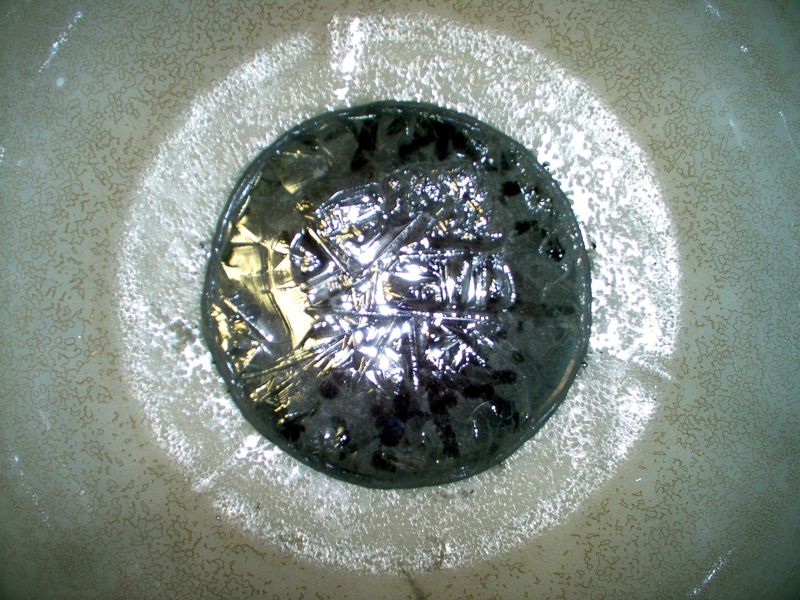
The quartz goes to a crucible maker, a pattern until a plant is namedcru-f1 · validated, where it becomes a short-lived vessel: the crucible degrades in use and cracks after it coolsspine-f2 · validated.
The silicon itself arrives by the other path (quartzite, an arc furnace, the Siemens process) at about forty-nine kilowatt-hours per kilogram on the solar-grade basis the IEA’s photovoltaic program publishes; the electronic-grade figure this chain actually runs on is higher, and nobody publishes it. Either way the silicon in one chip cost about a watt-hour, a few seconds of a home’s electricity. The fab’s electricity is expected to be the larger term, and this study did not obtain itpoly-f1 · validated.
3 · the wafer and the fab
A crystal is pulled, sliced into wafers, a market of a small number of firms, with Japan’s SUMCO, by its own account, among the front-runners, and we have found no public agency that publishes the shareswaf-f1 · validated, and the wafers go not to the famous five-nanometer fabs but to older, cheaper lines: the legacy-node factories where power-management chips are made, and where through the 2010s almost nobody added capacity.
When the pandemic’s demand wave hit those lines, the number that tells the story is federal: the Commerce Department’s supply-chain inquiry drew more than 150 responses and found that the median inventory of the chips buyers highlighted had fallen from forty days in 2019 to less than five days in 2021, naming, in its own words, “analog chips (used in power management…)”fab-f2 · validated. Five days. That is the just-in-time number of the entire chip shortage, and it belongs to this chip.

chips got plants
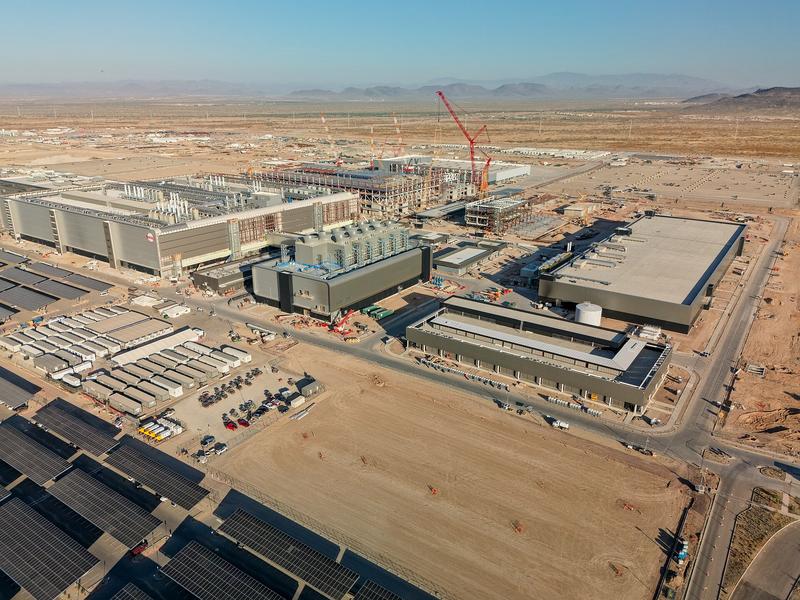
What happened next is the part the next chapter will not be able to say. The legacy-node class reorganized: Texas Instruments broke ground at Sherman, Texas in 2022 on up to four 300-millimeter fabs, and in December 2024 signed for up to $1.6 billion of federal CHIPS funding across threefab-f1 · validated; fab-g1 · validated. Announcement to first wafer runs about three years, the same shape as the transformer chapter’s expansion delay.
That the class stagnated before 2020 is the chapter’s claim, not yet its primaried fact: the trade body’s capacity numbers are forecasts and the chapter labels them as suchfab-f1 · validated.
6 · the partial return
The copper chain came back around as a cycle. This one does not, quite: when the charger dies, the board goes to an e-waste stream where the copper and gold are recovered and the silicon is lost, work done by a recovery workforce, formal and informal, in the places that do the world’s recoveringew-f1 · validated; ew-g1 · validated. The copper on the board re-enters the copper chapter’s scrap pool (the map draws that arc)sand-x4 · validated, and the chip itself ends. Three chains, three endings: copper cycles, silicon ends, and salt, next, mostly burns.
Chapter four · salt
Follow one bag of intravenous saline, start to finish. Its paperwork would look something like this; the study fills in each line only as the referees validate it.
WAYBILL · consignment 4 of 6
| Consignment | one liter bag of intravenous saline; one plant made about 1.5 million a day, in the hospital association’s words and on its figure alonenc-c1 · validated |
| Origin | brine from a Gulf Coast salt dome; the bag filled at Marion, North Carolina |
| Distance traveled | the finished bag’s last leg is at least about 850 miles (1,350 km) in a straight line, from the plant at Marion to the Dallas area; the route itself is longer. Before that the consignment is not one object: brine becomes chlorine, chlorine becomes film, film becomes a bag at Marion, and no leg upstream of the plant is namedroute-d5 · validated; route-s1 · validated |
| Days in transit | no figure the transit time is not measured for the last leg, and the legs before the plant are not namedroute-s1 · validated; route-d5 · validated |
| Energy to make | no figure the one energy this study measured is the chlorine room’s, per tonne of chlorine and caustic made together; a bag’s share would need the chlorine in its film and a split between the two products, and the water, the film and the sterilizing are not measuredconv-s1 · validated |
| Salt at the start | of about 40 million tonnes a year, brine is the cheapest form at about ten dollars a tonne against fifty-six for rock saltbrine-f1 · validated |
| Buffer at destination | not a days-of-inventory figure: what the record holds is the days from the plant’s closure to the first documented allocation of suppliesnc-w1 · validated |
| Final disposition | single use; what becomes of the bag is not measured in this study |
You watch the drip. The bag on the pole is salt water, the plainest thing in the hospital, and one flooded plant in North Carolina made about sixty percent of what American hospitals use in a day, on the hospital association’s figure. Within days, supplies were being reserved for certain patients. The chain begins in a salt dome.nc-c1 · validated; nc-w1 · validated
the bag
A liter of salt water in a plastic bag, hanging from a pole. About 1.5 million of them are used in American hospitals every day from one plant alone: “approximately 60% — or 1.5 million bags,” in the hospital association’s words, the “approximately” governing bothnc-c1 · validated, attributed. Two kinds of salt meet in it: the sodium chloride dissolved in the water, and the chlorine that became the bag.

1-2 · the brine and the chlorine room
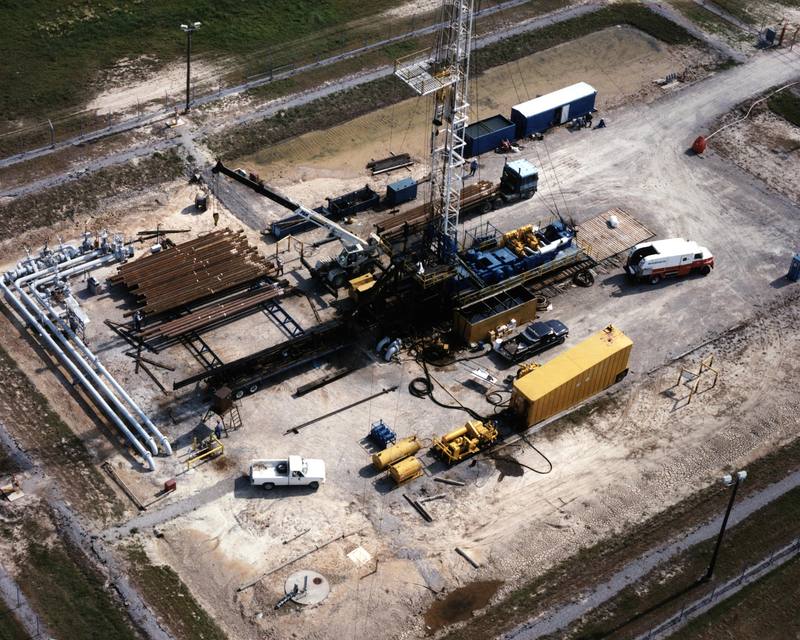
The cheapest salt is brine pumped from Gulf Coast domes, about ten dollars a tonnebrine-f1 · validated; the survey names no operations, so the map draws a ring, and the Who stays at that precision toobrine-g1 · validated. Electrolysis splits it: one tonne of chlorine, 1.1 of caustic, always, at about 2,600 to 2,900 kilowatt-hours per tonnechl-f1 · validated; chl-c1 · validated. The lock: made together, sold apart, and chlorine cannot wait, while caustic sits happily in tanks, so production follows chlorinechl-f1 · validated.
2b · the vinyl works, and who is beside them
Where the chlorine goes next, the chapter has not stopped: the vinyls plants, and the people beside them, one of whose communities, Mossville in Calcasieu Parish, has largely ceased to exist as a placechl-g1 · validated; pvc-g1 · validated. That buyout was Sasol’s, whose plants there are not this chain’s.
3 · the bag works, and the storm
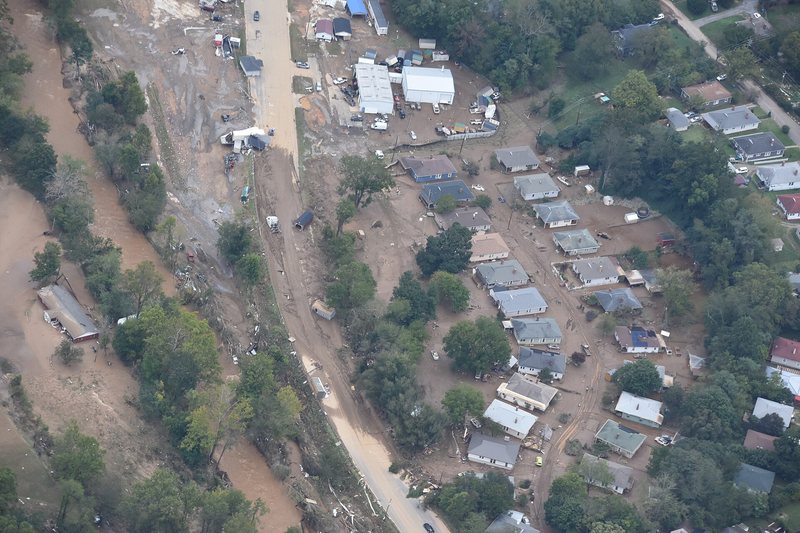
Marion, North Carolina: ten manufacturing lines, more than 2,500 employees, and the about-1.5-million bags a day. Helene’s rain came down the valley on the morning of September 27helene-f1 · validated; by September 29 the plant was “affected by flooding and currently closed for production.” The clock that follows has three marks, and the chapter names each one: the first line, the highest-throughput one, a quarter of the plant’s output, back on October 31, thirty-two days in; all ten lines on January 28, one hundred and twenty-one days in; pre-hurricane output on February 17, day one hundred and forty-onenc-f1 · validated.
One honesty note rides with the storm: the system was already short before it. Of the nine IV products on the FDA’s shortage list after the storm, six had been listed before it, the common dextrose solutions since February 2022 and normal saline since June 2018; three were new. The storm mostly deepened listings that already existednc-f1 · validated; nc-f2 · validated.
Who this card names
salt · 3 · combine (the bag works)
Baxter North Cove
- Who
- Baxter International runs the plant, with more than 2,500 employees on two separate accounts, in McDowell County. The FDA is the shortage authority, and in its own words “FDA does not have authority over allocation or distribution of these products”. HHS names group-purchasing contracts among the causes of thin hospital buffers, and the statutory safe harbor (42 U.S.C. 1320a-7b(b)(3)(C)) is what makes that contracting model lawful[nc-g1 · validated].
- Energy
- This study holds no energy figure for this plant.
- Ecosystem
- This study holds no ecosystem record for this plant.
- The comparison
- About 60%, or about 1.5 million bags, of the IV solutions used in the US every day, in the hospital association’s words, with the “approximately” governing both[nc-c1 · validated, attributed]. Three dated milestones followed Helene: the first line at day 32, all ten lines at day 121, pre-hurricane output at day 141, and the shortage itself was not over for about eleven months[nc-f1 · validated].
Each bracketed id is a row in the study’s register, listed in Appendix A of the paper.
the two valleys
Same storm, two valleys, closures three days apart, and two clocks that do not line up, so the chapter draws the whole ladder rather than a single bar. The comparison everyone reaches for, two weeks against “fully recovered,” cannot be made at all: the mine never published a full-capacity datesand-x1 · validated; salt-x1 · validated.
What separates a two-week node from a four-month node is depth of damage times the regime that governs restart, and where the buffers sat.
the shortage at the bedside
Nearly eighty-five percent of four hundred hospital pharmacists surveyed in mid-October reported a moderate or critical impact, critical meaning treatments delayed or canceled; they converted infusions to injections, bought premixed drugs, used smaller bags, reserved supplies for certain patients. In the same survey, seventeen percent of all participants reported canceling or delaying voluntary surgeriesnc-w1 · validated, ASHP, attributed.
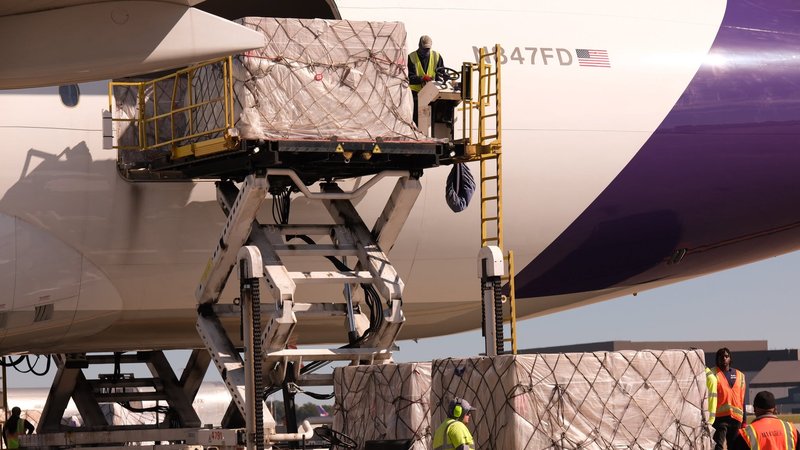
FDA authorized imports from nine of Baxter’s own plants abroad, three weeks in, and by the end of the year, by the company’s account, nearly two hundred airplanes had delivered nearly eighteen thousand tons of productnc-g2 · validated. And FDA said, in its own words, what it could not do: “FDA does not have authority over allocation or distribution of these products”nc-g1 · validated.
the third clock
The plant was back in about four months. The shortage was not over until August 2025: “approximately eleven months,” in the hospital association’s statement of record to the Senate. The seven months in between are the pipeline refilling and the allocations unwinding, and they are this chapter’s sentence: the system recovers when the buffers refill, not when the plant restartsnc-f1 · validated.
the repeat offender
In 2017 Hurricane Maria hit the same company’s plants in Puerto Rico and the country ran short of saline; the FDA Commissioner said the shortages “resulted from, or were worsened by” the storm. The shortage listing for normal saline that FDA posted on June 21, 2018 was still open when Helene hit: one unbroken listing, deepened by two hurricanes seven years apartnc-f2 · validated. The response was the same playbook both times (emergency imports, new entrants, extended expiry), faster in 2024. The response layer reorganized. The capacity layer did not. The bridge got better; the plant count did not.
Chips got plants. Bags got airlifts. Whether a shock de-concentrates a chain depends on the market structure around the node, not on the shock.
learned to respond, not to be less fragile
Between Maria and Helene, American institutions learned to respond: the same FDA toolkit, used faster, with an airlift and a Defense Production Act order for one remediation material. They did not learn to be less fragile. The ledger, all on the primary record: the law requires firms to keep a “redundancy risk management plan,” kept by the firm, inspected only, “as appropriate”; a proposal to pay hospitals for buffer stock was solicited and “not adopted”; the strategic reserve “focuses on… countermeasures that do not have a commercial market”; a six-month reserve bill sat unenacted in October 2025; and the 2024 federal white paper on preventing shortages never mentions Maria, Baxter, saline, or IV fluidsnc-g2 · validated.
The transformer chapter found a reserve question with an owners’ club to answer it. This one is its medical twin, with the club missing.
Chapter five · oil
Follow one tank of diesel, start to finish: the leg underneath every other chain in this study. Its paperwork would look something like this; the study fills in each line only as the referees validate it.
WAYBILL · consignment 5 of 6
| Consignment | one tank of diesel, the fuel in the truck that delivered the other four |
| Origin | the Permian Basin, west Texas and New Mexico: two states that were 59 percent of US crude production in 2025, against 23 in 2002oil-c1 · validated |
| Distance traveled | the diesel’s last leg is at least about 250 miles (400 km) in a straight line, from Port Arthur, where the map places the refining, to the Dallas area; the route itself is longer. The crude’s leg before it cannot be bounded: this study places its origin as a region, the Permian Basin, and a straight line from the region’s center is not a floorroute-d4 · validated; route-o1 · validated |
| Days in transit | no figure the transit time is not measured for either leg. The fuel in the pipes is counted inside the buffer below, as the part of the stock nobody can drawroute-o1 · validated; route-d4 · validated; oil-b2 · validated |
| Energy to make | no figure a refinery makes diesel, gasoline and jet fuel from the same barrel, and one tank’s share of its energy depends on how that energy is divided among them, a choice this study has not madeconv-o1 · validated |
| Refined at | the Gulf Coast holds 54.4 percent of operable US capacity, and Port Arthur’s three refineries 7.0; why refining sits there, whether geology, ports or permits, a capacity table cannot sayoil-n1 · validated |
| Buffer at destination | about 27 to 29 days of distillate cover in mid-August 2026, against about 32 to 34 in the same week of 1996; a ceiling on comfort, not a countdownoil-b2 · validated |
| Final disposition | burned. What a severed link costs is this Roundtable’s first study’s finding: a median of about $23 billion a month in American household costs, falling at 8.9 percent of after-tax income at the bottom against 1.6 at the topoil-s1 · validated |
You find the shelf empty, then the pump bagged, then the ward waiting on a delivery that did not come, because the last leg of every other chain is a truck. Mid-August 2026 the country held about 27 to 29 days of distillate cover, a ceiling on comfort and not a countdown. The chain starts in a Texas oilfield.oil-b2 · validated
the fuel
Four chains have ended in this house. Every one of them arrived on a truck.
This chapter follows the fuel in that truck, diesel, which is the only product in the study whose map is every other map's stage five. It is not a fifth chain beside the others. It is the leg underneath them.
1 · extract
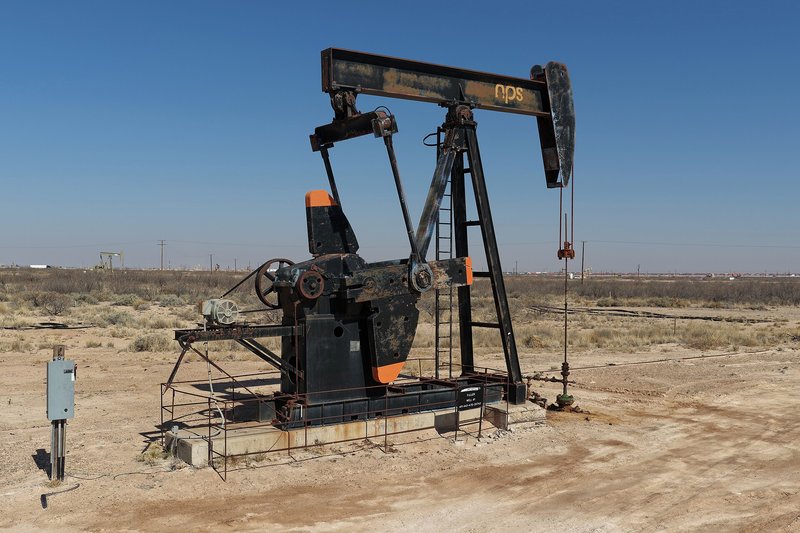
The crude starts in west Texas and southeastern New Mexico. Two states produced 58.9% of American crude oil in 2025oil-c1 · validated.
The number that matters is not that one. It is the shape behind it: that share fell for two decades, to 22.6% in 2002, and then rose 2.61×. Concentration here is not the resting state of the system and it is not fate. It was reduced, and then it was rebuilt, inside one working lifetimeoil-c1 · validated.
The pin is a ring, not a dot, because the evidence is state-level: the record names two states, not a wellhead, and the map says only what the record says. Read that as a limit of the record and not a description of the place: the people who live above this rock are not absent from it, they are absent from a figure drawn at the wrong scale to hold themseat ruling.
who owns the rock
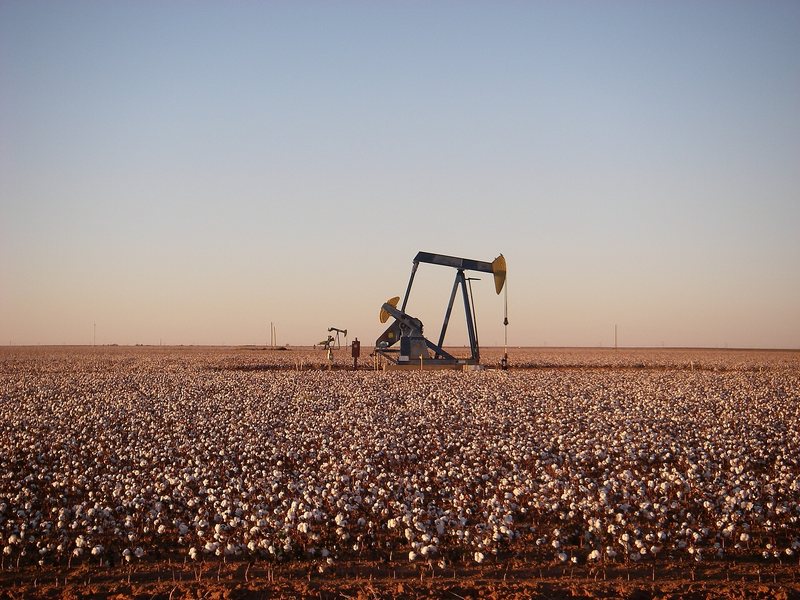
In New Mexico some of this rock is state trust land, and the royalties have a named destination: the Land Grant Permanent Fund, paying out more than a billion dollars a year to schools and universitieswho-up2 · validated.
Two things this beat does not say: how much of this oil pays that rent: the land split is not sourced, so the fund is context and not attribution, and how many people work here: this study holds no count of them, so the headcount is left out on purpose.
what the regulator has had to do
Oil comes up with water; the water is injected back underground, and the injection has been making earthquakes. The Railroad Commission of Texas drew Seismic Response Areas and acted inside them: in Northern Culberson-Reeves it suspended every deep disposal permit, 23 wells, from January 12, 2024who-up3 · validated.
Two things in the record are worth more than the enforcement. A clock: the Commission’s own estimate, not a measured interval, is twelve to eighteen months between injection rising and seismicity rising; asked how long a decrease takes to show, it publishes no number at all, and the physics says that wait is longer, so every number here is measured earlywho-up3 · validated; seis-x1 · validated. And a buffer decision written down by an institution: it acts at magnitude three to prevent five.
Did it work? Counts fell inside the response areas, and fell about as much in untreated ground nearby. Whether the biggest quakes responded cannot be checked for about a century at their rate; there are under three years. The Commission set its goal on the indicator it could verify, and then acted on the indicator it could notseis-x1 · validated.
the wrong control
The Commission did not close disposal in an area. It closed deep disposal, and the right comparison was inside the treated area the whole time: the shallower rock under the same ground. Split by depth, the deep earthquakes nearly stop, down about 92%, while the shallow ones fall by about 48%, roughly what the whole basin was doing anywayseis-x1 · validated. Held loosely, for stated reasons: quake depth is not well depth, the catalog resolves depth to about a kilometer, the deep counts are small, and it is measured early.
And the tidier story, a closed gate simply moving the flow next door, was tested and did not survive: New Mexico’s new deep wells were falling before Texas acted: eighty across the four years before the interventions, twenty-one across the four afterseis-x1 · validated. One door stays open: volumes into wells that already existed are unpublished: untested, which is not the same as tested and clear.
the other regulator
New Mexico was never a bystander. It was already regulating induced earthquakes of its own, by a different theorywho-up3 · validated: Texas asks which rock you inject into; New Mexico asks how close you are to what already happened. Four regulatory acts, two agencies, two states, inside fourteen weeks: one professional response, seen from two sides of a line, which is a different thing from a hazard migrating.
Not a fifth case of the pattern in “How we know any of this”: one observation seen twice, and the count stays at fourseat ruling.
2 · process
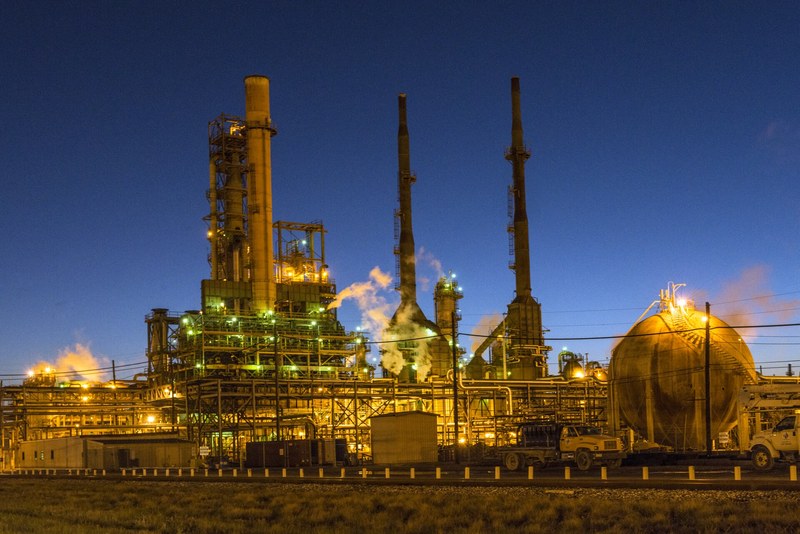
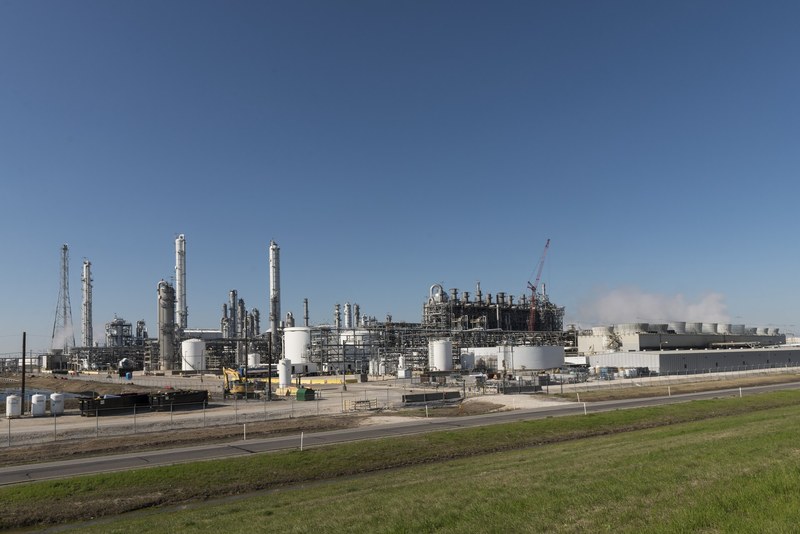
Crude becomes diesel on the Gulf Coast: the eight largest American refineries include seven in one regionoil-n1 · validated, and Port Arthur, Texas alone holds three, together 7% of national capacityoil-n1 · validated. Why there is a question this chapter does not answer: geology, ports and permitting may not even compete: one reading, untested here, is a position inherited and then frozen.
who lives with it
Three refineries, three owners: Saudi Aramco’s Motiva, Valero, TotalEnergies: seven percent of American refining capacity in one town, held by a foreign state oil company, an American independent and a French majorwho-rf1 · validated. The town is Port Arthur: 56,039 people, median household income three-fifths of the state figure, poverty at 29.1% against 13.8%who-rf2 · validated.
The most documented environmental record here is not about the refineries: a 2021 civil rights complaint against the state regulator, over inadequately monitored emissions from a petroleum-coke facility, investigated for two years, closed without a finding either way, and re-filablewho-rf5 · validated. The neighborhood it names is West Port Arthur, and this study puts no number beside that name: it has no boundary anyone tabulates, and any figure we printed would be a line we had drawn ourselves, wearing the Census’s authorityseat ruling. The 56,039 describes the town that hosts the complex, not a count of anyone’s exposure to anything.
the slack question
Every chapter so far has asked how deep the buffer is. In refining, the buffer has a name: idle capacity. A plant running at 91% has 9% of itself in reserve; a plant running at 96% has almost none.
The obvious story is that the slack was squeezed out. That story is wrong, and it was the first thing I wrote down, because it is what anyone expectsoil-c2 · validated. Utilization climbed from 77.6% in 1985 to a peak of 95.6% in 1998, and in 2025 was 91.9%, below that peak. The tightening is an era, not a trend.
why it moved
Utilization is throughput divided by capacity, so the change splits exactly into the twooil-c3 · validated. Which window you choose decides the answer, so both are here, each with the question it actually answers.
What brought utilization back after 2020? Demand. Throughput rose 13.4% while capacity fell 2.6%: 83% of the movement is the numeratoroil-c3 · validated.
Is the system tighter than before the pandemic? Yes, and not because it is busier. Since 2019 throughput has fallen 1.7% and capacity 3.4%: the plant runs hotter on less work done. Capacity peaked at 18,808 thousand barrels a day in 2019, bottomed at 17,963 in 2022, and has clawed back about a quarter of that, not steadily, and still 635 below its 2019 peakoil-c3 · validated.
Slack in this system is a residual, never a reserve, and when it persists, it is removed rather than carried.
5 · distribute
Downstream of the refinery the buffer stops being idle steel and becomes something simpler: tanks. The question a reader can hold is how many days of it there are.
Mid-August 2026: about 27 to 29 days of distillate cover: stocks of distillate against distillate product supplied, averaged over four, thirteen and fifty-two weeks, against about 32 to 34 on the same week in 1996, measured the same wayoil-b2 · validated: four to five days less, and the lowest of any comparable August in a record that begins in 1991. That difference is taken basis by basis, not by subtracting the two ranges.
Read that as a ceiling, not a countdown. Tank heels and pipeline linefill sit inside the number and are available to nobody; exports are netted out; and it is an August rate standing against a winter risk. All three point the same way: the real buffer is shorter than the figure.
the leg underneath
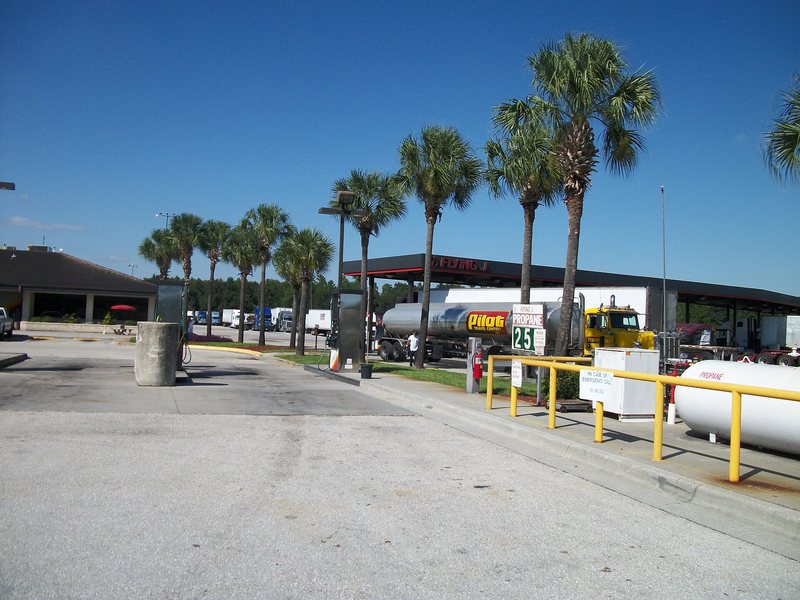
Those three lit lines are the final leg of three of the other chains: the wire to the house, the transformer to the substation, the saline to the ward. Every one of them ends on a truck, and every one of those trucks runs on the product this chapter just built. The chip’s last leg is not on this map: the study does not locate where it starts.
The other chains have chokepoints of their own. This one is different in kind: it does not have to break to be felt everywhere, because it is already inside every other chain's last mile.
what the fuel chain is
Diesel is the only product in this study that is not a thing you own. It is the one that moves everything you do own. A severed diesel link is felt two ways, and the Roundtable has now measured one each: the price channel was Study 1, a median $23.3 billion a month in added household cost, falling hardest where there is leastoil-s1 · validated, and the physical channel is this chapter: how many days of it there are. Neither stands in for the other: one severed link has two clocks, and we have wound each separately.
Chapter six · lithium
Follow one grid battery, start to finish. Its paperwork would look something like this; the study fills in each line only as the referees validate it.
WAYBILL · consignment 6 of 6
| Consignment | one grid battery: cells stacked into modules, modules into packs, packs into containers wired into a substation |
| Origin | brine under the Salar de Atacama, Chile |
| Distance traveled | outbound about 10,500 to 11,200 miles (16,946 to 17,964 km), northern Chile to China; inbound about 6,700 miles (10,760 km), the same crossing the copper chapter measuresroute-d3 · validated |
| Days in transit | outbound, about three to three and a half weeks at sea: the carbonate travels bagged and containerized, on the salt flat’s other operator’s own filing, which also names break bulk as an alternative. Inbound, 14 to 15 days: battery packs cross by sea in containers; on the federal trade record for 2024, 99 percent of this cargo by weight went by vessel, and 99 percent of that in a boxroute-t6 · validated; route-t5 · validated |
| Energy to make | no figure a battery’s making energy is counted per kilowatt-hour of capacity, and this one’s size is not stated. The one step the study did measure, evaporation, the operator says the desert sun does, and it is limited by time, not fuelconv-l1 · validated; li-e1 · validated |
| Assembled at | for the one product this study sourced, the maker’s own annual filing names Lathrop, California and Shanghai; one product, not a statement about the industryli-p1 · validated |
| Buffer at destination | at the pond, about as many months of its own output as the brine spends in it; at the destination, none published, in tonnes or in daysli-w1 · validated; li-b1 · validated |
| Final disposition | beyond this study the chain is followed to the battery yard, where the battery stands in service, and no further. Whether any of its lithium comes back into the chain, and by what route, is not in this study’s sources: no return leg is drawn on the map, and a missing leg is not a finding that none exists |
Seven in the evening, the hour the grid’s batteries were meant to carry, and your lights are running on something else. The cell that did not arrive cannot be hurried: brine spends about eighteen to twenty-four months in Albemarle’s ponds, by its own account, and longer if the weather is poor. The chain starts in the driest desert on Earth.li-e1 · validated
A lake you cannot drink
High in the driest desert on Earth, there is a flat white plain the size of a small country. Under its crust sits water, but water with so much salt dissolved in it that it is closer to syrup than to anything you would pour. Pumped up, it is not a drink and not a mineral. It is a solution, and the thing worth having is dissolved in it.
Everything in this chapter follows from that one fact. The other five chains in this study begin with a rock that is dug. This one begins with a liquid that is pumped, and a liquid behaves differently. It moves, it refills, and it is shared with whatever else is drawing on the same ground.
Almost every pin on this chain is a ring, not a dot. A ring means the study is showing you a stage, not naming a plant. One of the six has earned a dot, and it earned it after this chapter was drawn, which is the honest state of a chapter this young.
One aquifer, three companies
In December 2024 a Chilean environmental tribunal approved a settlement naming a copper mine, a second copper operation and a lithium producer together, sued jointly by the Comunidad Indígena Atacameña de Peine over one named body of groundwater: fourteen measures, about US$47 million, and a standing table where the community and the companies sit, most of the measures still waiting on a baseline studyli-x1 · validated, approved on a divided bench, the dissenting minister holding that nothing in the agreement repairs the drawdown itselfesc-g1 · validated.
Two chains in this study are linked, and it is worth being exact about how. By an instrument: one community, one proceeding, one shared bill. They are not shown to be linked physically; that is disputed among the people who study it, and this study does not settle it.
The clock money cannot shorten
To get lithium out of the brine, the sun does it: shallow ponds, while the desert takes the water off. This is the first clock in the study that money cannot shorten: build more ponds and you get more tonnes; you do not get them sooner.
How long? Albemarle, describing its own ponds in its own annual report: about eighteen to twenty-four months, and “if weather conditions are not favorable, the evaporation process may be prolonged”li-e1 · validated. Twenty-four months is not a ceiling: the company declines to put one there, and neither will we.
One company’s ponds, not the salt flat’s: the other operator on this salar describes the same pond sequence and never says how long it takes.
Mined is not refined
Digging lithium up is one industry. Turning it into something a battery can use is another. At the mine stage no one dominates: Australia rather more than a third, the top three about three-quarters, shares of a world total in which the US figure is withheldli-c1 · validated. At refining, on the IEA’s published chart, China holds around seventy percent and the top three nearly all of itli-c2 · validated. Same material, same year, two different worlds, and the more quotable figure answers the question nobody asked.
Against copper, on one chart
Concentration is only alarming next to something. Same chart (the International Energy Agency’s, of who refined what in 2024), same year, same stage: refined lithium about seventy percent in one country; refined copper about forty-four. And the same chart is why this chapter will not call lithium the most concentrated of anything: battery-grade graphite and magnet rare earths both sit above itli-c2 · validated.
Shares read off a printed bar chart, good to a point or two: a reading, not a measurement, and the register says so on the row.
The thing that keeps the lights on
Packs into containers, containers into a fenced yard wired to a substation, the Editor’s choice of endpoint, because a phone dying is not a systemic event.
It lands this chapter beside chapter two, arriving from the opposite direction: a transformer and a grid battery are two answers to what stands between the generator and the house.
What this chapter does not hold
The honest state of this chapter: validated: the shared-aquifer settlementli-x1 · validated, the pond clockli-e1 · validated, the mine-stage sharesli-c1 · validated, where this product’s packs are assembledli-p1 · validated, the refining shares as read off one published chartli-c2 · validated; not built: the link from the cathode back into iron, because the premise its test rested on could not be sourced li-p2 · ruled: not built.
The clock says one number twice: every tonne spends eighteen to twenty-four months in Albemarle’s ponds (one operator’s figure, in months, with no ceiling the company will state), so at any moment the ponds hold that much of their own output. The residence time is the inventoryli-w1 · validated.
Is that a buffer? No answer until you say what against. Against a cut behind the ponds, on this path, it is eighteen to twenty-four months in hand; against anything in front, nothing at all. And it buys time, not supply: a six-month interruption still arrives undiminished, eighteen to twenty-four months lateli-b1 · validated. Warning and absorption stay two columns, never summed, each endpoint named, and nothing here is ordered by cover.
The question a reader most wants, days from a break to the wall socket, was the wrong question: cover is not a property of a chain. It is a property of a cut. How long a break takes to be felt is physics wherever a transit time is published; how much is absorbed is unpublished at every linkli-b1 · validatedli-b2 · validated.
Chapter seven · disruption
Six chains, six chapters, and one question underneath all of them: if a link went, when would you know?
This chapter answers it from the record (every case below is something that happened, with dates), and it answers it in a shape that surprised the people who built it. There is no single answer, because there is no single break.
It also declines something the study set out to do. We meant to say which interruptions were most likely. We cannot: the cases here are in the study because they happened and were written down, which is no basis for a rate, and the hazard data that does exist covers hurricanes and earthquakes far better than it covers a fire at the only crucible works. An ordering built on it would rank these chains by how well studied their hazards aredis-p1 · validated.
Six chains, two questions
Ask each chain how long a break takes to reach you and the six do not even answer the same kind of question. Physics decides what kind of answer a chain can give about its own disruption; the record decides whether we have it, and more study fills the second, never converts one into the otherdis-s1 · validated.
A curve (copper). A transit nobody can hurry (lithium). Days of cover, published weekly (oil). A queue with no failure clock (iron). Days of cover at the point of use, three endpoints dated (salt). Days of cover along the chain, and a halt somebody chose (sand). They cannot be put in order: an ordering, like a ratio, presumes a common origin, and these six do not share onedis-s1 · validated.
One storm, two valleys
Late September 2024: Helene takes a quartz district in one valley and a saline plant in the next, roughly fifteen to twenty kilometers apartsand-x1 · validated; salt-x1 · validated, and they came back on completely different clocks. Spruce Pine announced a restart about fourteen days after haltingspine-f1 · validated; North Cove reached pre-storm output a hundred and forty-one days after closing, and the shortage itself was still being reported to the Senate about eleven months onnc-f1 · validated. And the mine never published a full-capacity date, so only the restarts can be compared.
The plant coming back is not the shortage ending: the distinction this chapter exists to make.
The clock nobody can hurry
Lithium has no interruption on record, so its answer is computed. Brine spends about eighteen to twenty-four months in Albemarle’s ponds (one operator’s figure, in months, with no stated ceiling)li-e1 · validated. Postponement, not absorption: a six-month cut on this path arrives in full, eighteen to twenty-four months lateli-b1 · validated.
The mine that slows
Copper's answer is the one that refuses to be a number at all. The Escondida concentrator runs on desalinated water pumped up three thousand meters from the coastesc-c1 · validated, and if that supply were interrupted, the mine would not stop. It would slow.
So there is no single figure to give. Cover becomes a relationship between how much water is left and how hard the plant is being run, and the slowing is what would reach the market rather than any stoppagedis-s1 · validated.
We hold the shape and not the size: how much water is stored on site is a figure we do not have, so how long the slowing could last, or when it would become a stop, is a question this study cannot answeresc-w1 · validated.
The one somebody counts
Oil is the exception that shows what the others are missing. A federal agency publishes the stock and the rate it is consumed at, every week, so the buffer can simply be divided out.
US distillate cover in 2026 runs at about twenty-seven to twenty-nine days, measured against distillate supplied and averaged over four, thirteen and fifty-two weeks, against about thirty-two to thirty-four days in 1996, measured the same wayoil-b2 · validated.
The same barrels buy about four to five fewer days than they did in 1996, taken basis by basis rather than by subtracting the printed rangesoil-b2 · validated.
Worth noticing what makes this chain legible: not that its buffer is better understood, but that somebody publishes both halves of the fraction. No other chain here has that, and none of them is less important for it.
A queue, and half a clock
Built to order, nothing substituting. Iron’s answer is a queue: around three years, up to five, counted from the order placed, not from a failure, a DOE figure from producer conversations, not a measured seriesxfmr-f1 · validated. Its other half is missing: no failure clock published.
The escape hatch is a club. A national reserve was declined in 2015 for voluntary sharing; of five programs one adds a transformer to the country, and the two most formal had never been used as of DOE’s 2024 report, counted apart, never mergedgrid-g1 · validated. Whether it is enough is not provable: the one inventory is sized to a 98 percent likelihood of meeting anticipated need in its operator’s own model, and neither is public. Who it reaches can be said: members whose regulators let prevention be paid for. The study takes no position on what should exist; nothing speaks to how outages begin.
The case where the clock does not end
Every case above has a clock that stops. Mossville does not. Founded in the 1790s by African Americans, by its residents’ own account; largely bought out from 2013. There is no back-to-normal for a community that, for most of its people, no longer exists as a placepvc-g1 · validated.
This study spends four chapters on instruments that arrive late and arrive public: a fenceline monitor, a pressure gauge, a published quarterstudy-g1 · validated. Every one of them assumes somebody is still there to read it. And one has not turned up: the fence-line monitoring due July 2026 was deferred two years by a proclamation whose Annex I lists the plants exemptedchl-g1 · validated. Mossville is where most of the readers are gone. Annex I is where the reader is there and the instrument has not arrived.
The buyout is Sasol’s, not the vinyls chain this chapter follows.
What this chapter cannot say
It cannot tell you which break is coming: the cases are here on account of having been documented, and a set assembled that way carries no ratedis-p1 · validated. It cannot tell you what most of these chains are holding: the delays are public (physics, and operators describing their own processes); the inventories private where they are commercial, uncollected where they are notli-b1 · validated. And it will not tell you how a shortage felt to the person at the end of it: what happened to patients is recorded in a survey of their pharmacistsbed-g1 · validated.
The shape every chapter made
Three chains, six pairs, and the silhouette is the same every time: a thing stops in a day or two, and comes back in a season, or in years. That asymmetry is not a fact about storms. Stopping is a decision anyone can make in an afternoon; restarting is a queuenc-f1 · validated.
How long it takes to stop. How long it takes to come back.
◂ stopped inback in ▸
30 d90 d180 d270 d360 d
Each row is one register row, named, and every figure on it is computed from what that row states: a day count from two dates, a span the record gives in months drawn at the average month and labeled in months. An endpoint no validated row holds is drawn as an endpoint we do not have. The transformer's left-hand bar is open because the registers hold a lead time and no failure clock. The mine's is open because it halted the day before the flood, on the forecast, which is a decision and not a duration.
The receipt
The building wire in one average American house: what it took, in the only units this study trusts. The price line is the other ledger, money rather than quantities, set apart below them: the metal in it, about $840 at the 2024 average US producer cathode price, and not the wire. The people are named as roles, never as a count: six Who rows hold six different units, and no total can honestly be formed from themseat ruling.
Turn your phone sideways for a larger map.